Bol Bam: A Tradition Still Walking!


Every Sawan, the road forgets what it was built for.Trucks and buses give way to bare feet. Saffron floods the highway. Bamboo kanwars sway with the rhythm of a hundred thousand shoulders, and through it all runs the same unbroken sound — Bol Bam. It looks, from outside, like a simple errand: fetch water, walk, deliver it to Shiva. But nothing about the Kanwar Yatra is simple. It is an ancient ritual that has kept reinventing itself while refusing to become something else.
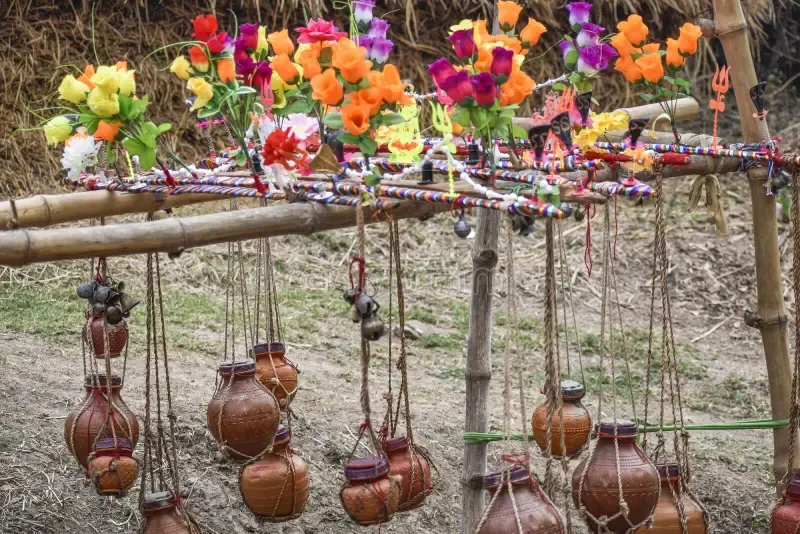
Its memory reaches back to Shravan Kumar — the son who carried his blind parents across the land in two baskets balanced on a single pole, so they could complete their pilgrimage when their own legs could not. He is, in myth, the first Kanwariya. Long before water or Shiva entered the ritual, the shoulder-borne journey already carried its deepest meaning: devotion as something you physically bear for another.
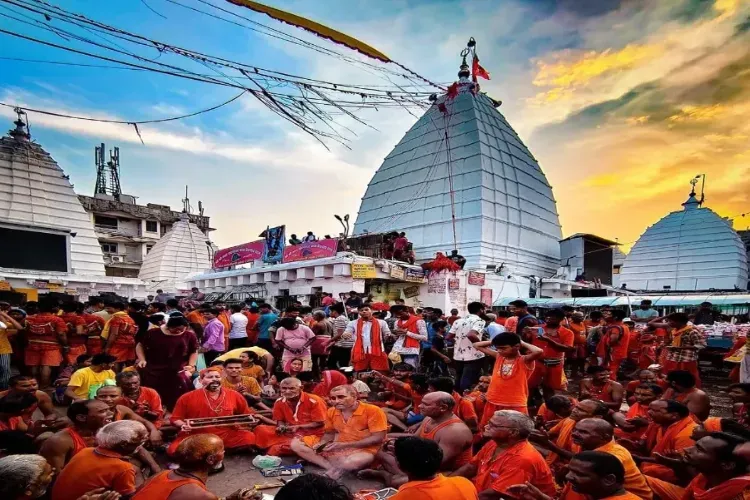
At Sultanganj, pilgrims lift Ganga water and carry it 109 kilometres to Baba Baidyanath in Deoghar. The distance is not incidental — it is the offering water, which we normally take for granted, becomes a vow the body must answer for. The shoulders bear the weight. The feet bear the miles. The mind learns what devotion costs.And the road asks nothing of anyone before it lets them walk.
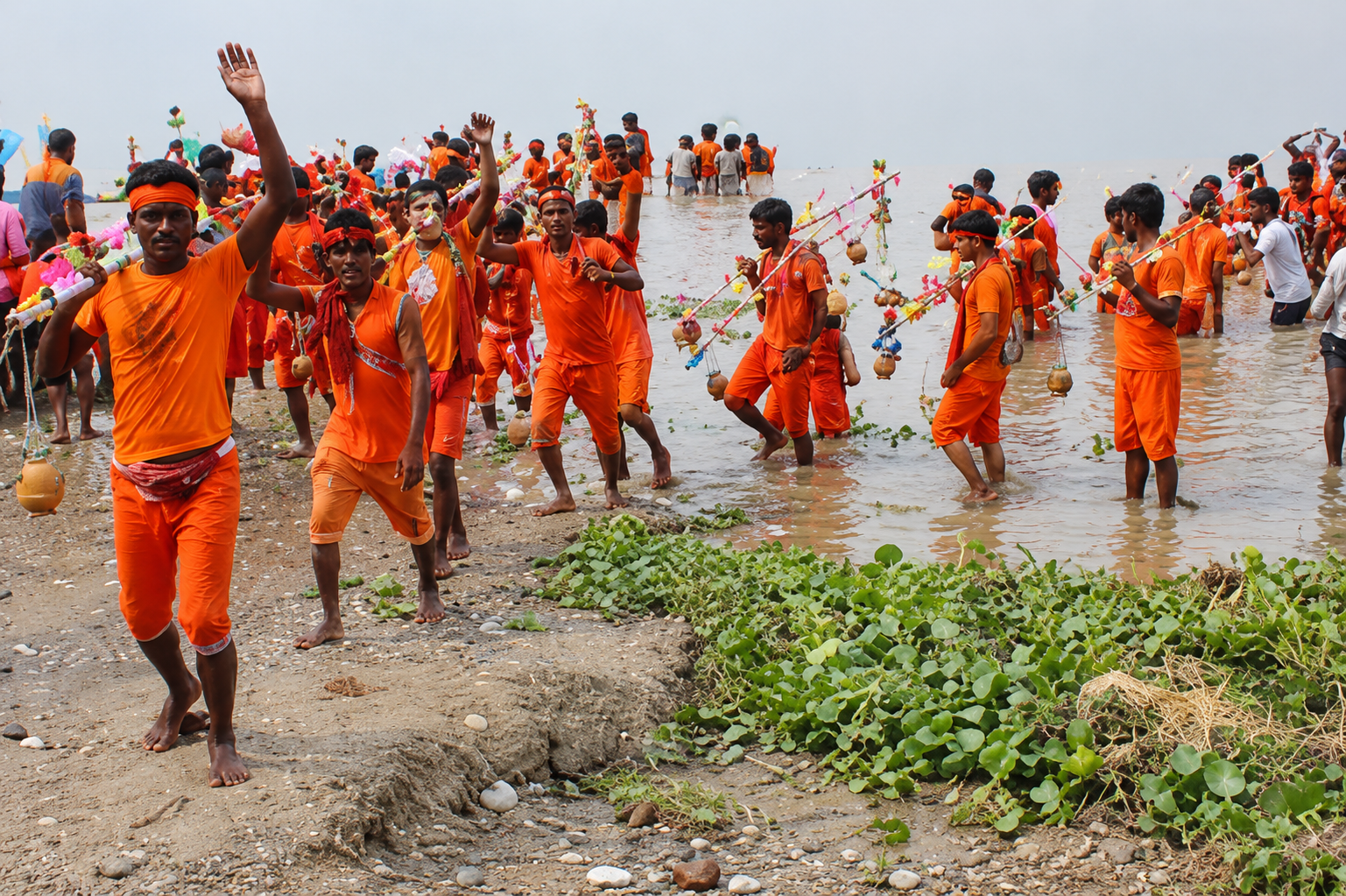
What makes it sacred is not the water. It is what the water passes through to arrive. A highway becomes a pilgrim path. A bamboo pole becomes a ritual object. Strangers become, for a few days, a civilisation — their own shelters, food lines, medical tents, their own makeshift order rising out of nothing. The kanwar itself is ancient; the scaffolding around it is entirely of this moment. That is not a contradiction. A tradition that survives is not one that resists change — it is one that knows how to metabolise it.
The Kanwariya is changing too The old image — a young man in saffron, travelling with friends — still exists, but it no longer tells the whole story. Women now walk in visible numbers. So do professionals, mothers, the old, the young. For many, the journey is pilgrimage and penance and physical trial and identity, all at once, without contradiction.Faith has never spoken only one language. It can be prayer and adventure in the same breath.
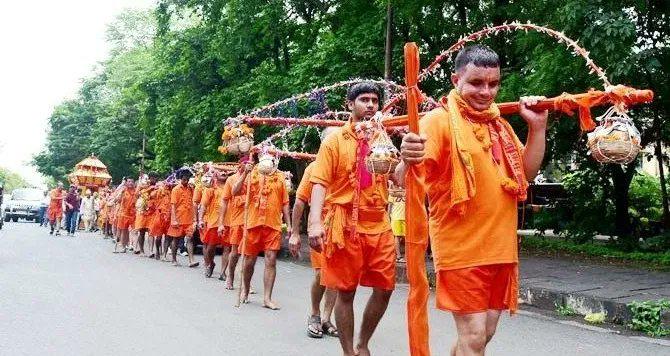
One recent addition to the Yatra deserves notice. In several stretches along the pilgrim route, administrations have begun asking meat shops to stay shut for the duration of Sawan, so that the road the kanwar travels remains vegetarian for the month. It is a new initiative, not an old custom, and like most new things it has drawn its share of debate. But stripped of argument, the impulse underneath it is simple enough to name plainly: a season of restraint, asked of a community in deference to those walking a vow through it. There are harsher things a road could ask of the people living along it than a few weeks of gentler eating.
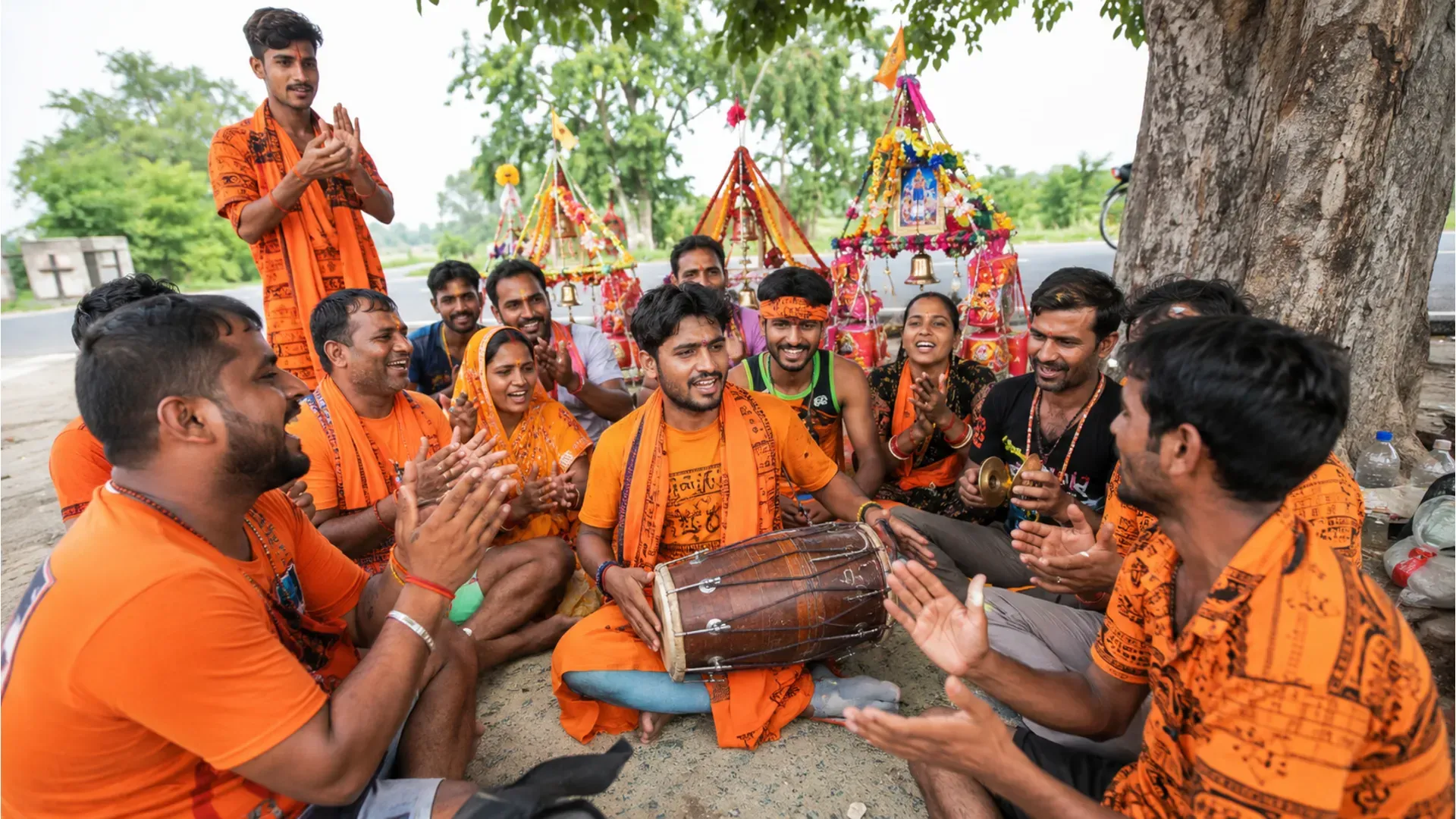
But, unfortunately, today not everything the roads carry is sacred Any honest account of the modern Kanwar must also name what has crept in alongside the devotion. Oversized DJ trucks, some towering well past the permitted limits, now travel with processions blaring Bollywood numbers at volumes that have drawn hundreds of noise complaints in cities like Delhi in a single week. This year alone, authorities in Meerut had to summon 250 DJ operators to enforce sound and size caps; elsewhere, viral videos of gridlocked highways and altercations along the route have become as much a part of the season's news cycle as the pilgrimage itself. A few groups have turned reverence into aggression — jostling commuters, damaging vehicles, or reacting to the smallest provocation with disproportionate anger.
This is not a footnote to be waved away in devotion's name. A pilgrimage measures itself by the discipline it asks of the pilgrim, and noise for its own sake, or hostility mistaken for zeal, is a corruption of the vow, not an expression of it. To love the tradition honestly is to be able to say so.
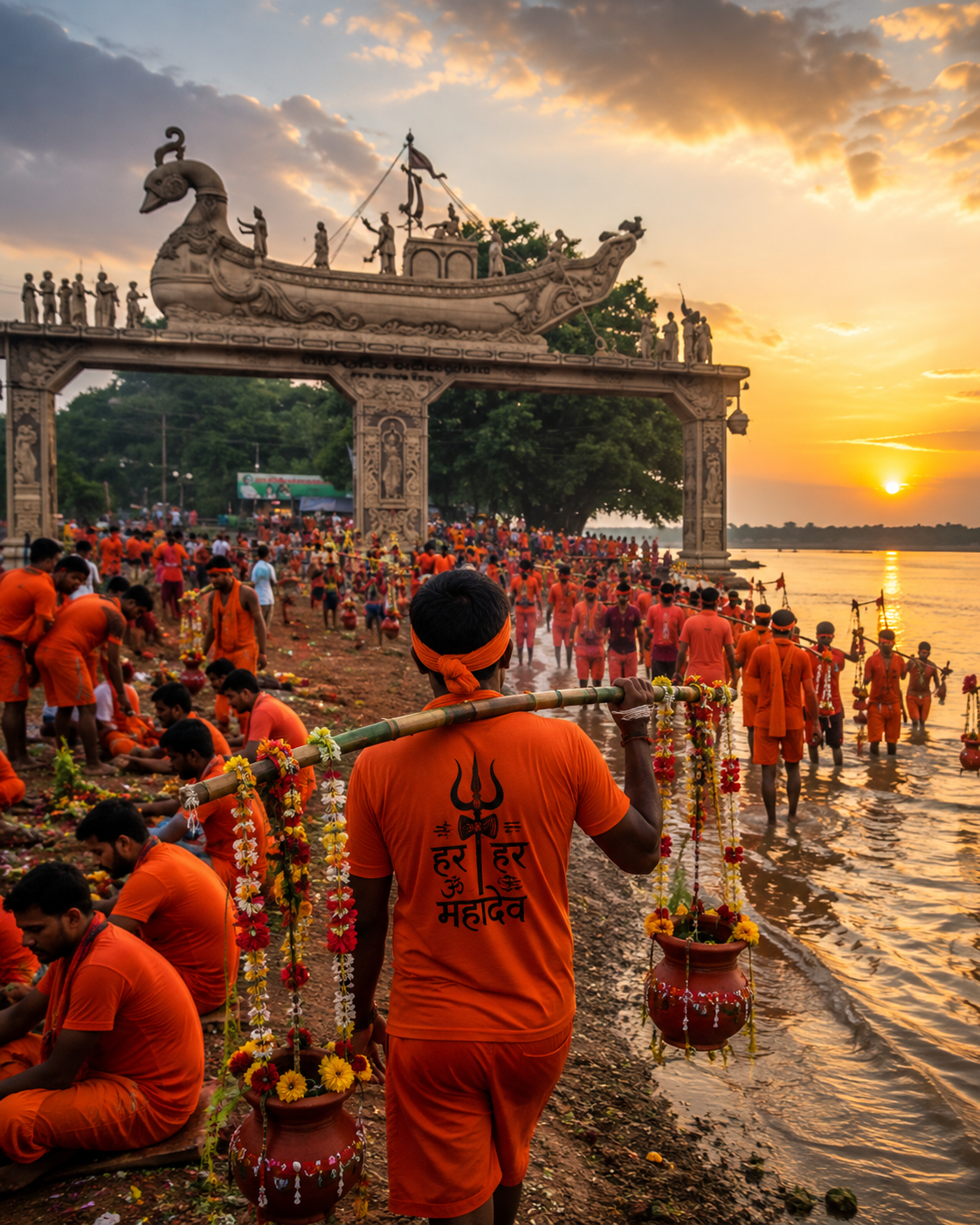
And then there is Odisha the story bends east, and deepens.At Gadagadia Ghat, where the Mahanadi remembers Gadagadeshwar Mahadev, devotees fill their bahungis and walk toward Lingaraj in Bhubaneswar, or Lokanath in Puri. The names change. The river changes. The vessel changes shape. But the grammar underneath is exactly the same:River. Water. Journey. Shiva.This is the truth the North-India-only version of the story misses — the Kanwar is not one pilgrimage but a form, endlessly localised, endlessly itself.
A living tradition A dead tradition is preserved. A living one is performed, again and again, until performance becomes memory becomes ritual.In an age of speed, the Kanwariya chooses slowness.In an age of delivery, he carries the offering himself.The road is modern. The pilgrim is not.The river gives. The devotee carries. Shiva receives.It is not a tradition frozen in time. It is one that is still walking.
Note:(pics from internet for illustration only)

-SunheriSufi
Comments (6)