Different Strokes,Same Blood!


Navigating the complicated father-son dynamic.
Few relationships are as fraught as father and son — and Indian history offers some of its starkest case studies: duty curdling into rivalry, ambition eclipsing affection, sons becoming the very thing they once rebelled against.
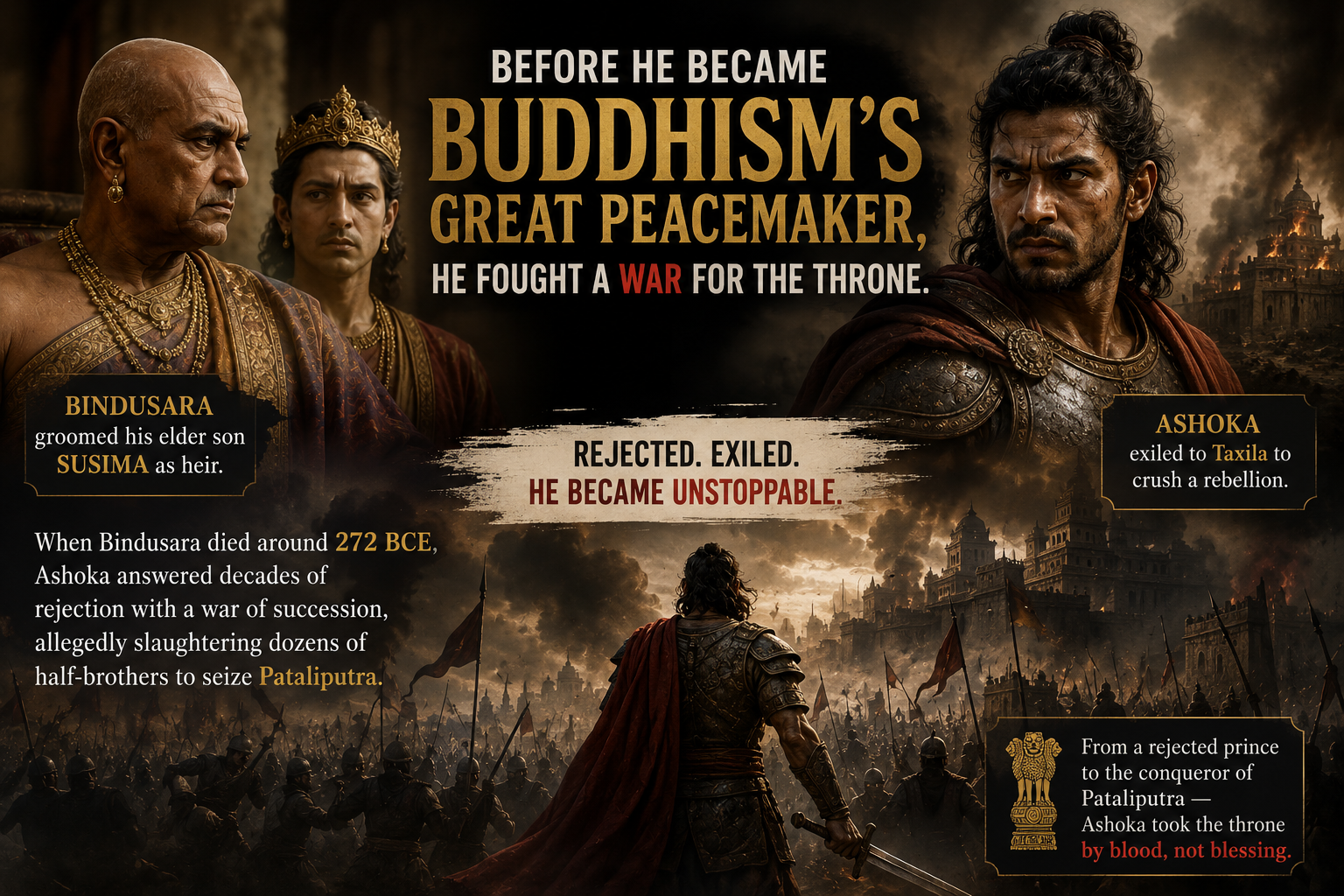
Before he became Buddhism's great peacemaker, Ashoka was the son his father didn't want on the throne. Arrogant and unruly, he was exiled to Taxila to crush a rebellion while Bindusara groomed his elder son Susima as heir. When Bindusara died around 272 BCE, Ashoka answered decades of rejection with a war of succession, allegedly slaughtering dozens of half-brothers to seize Pataliputra.
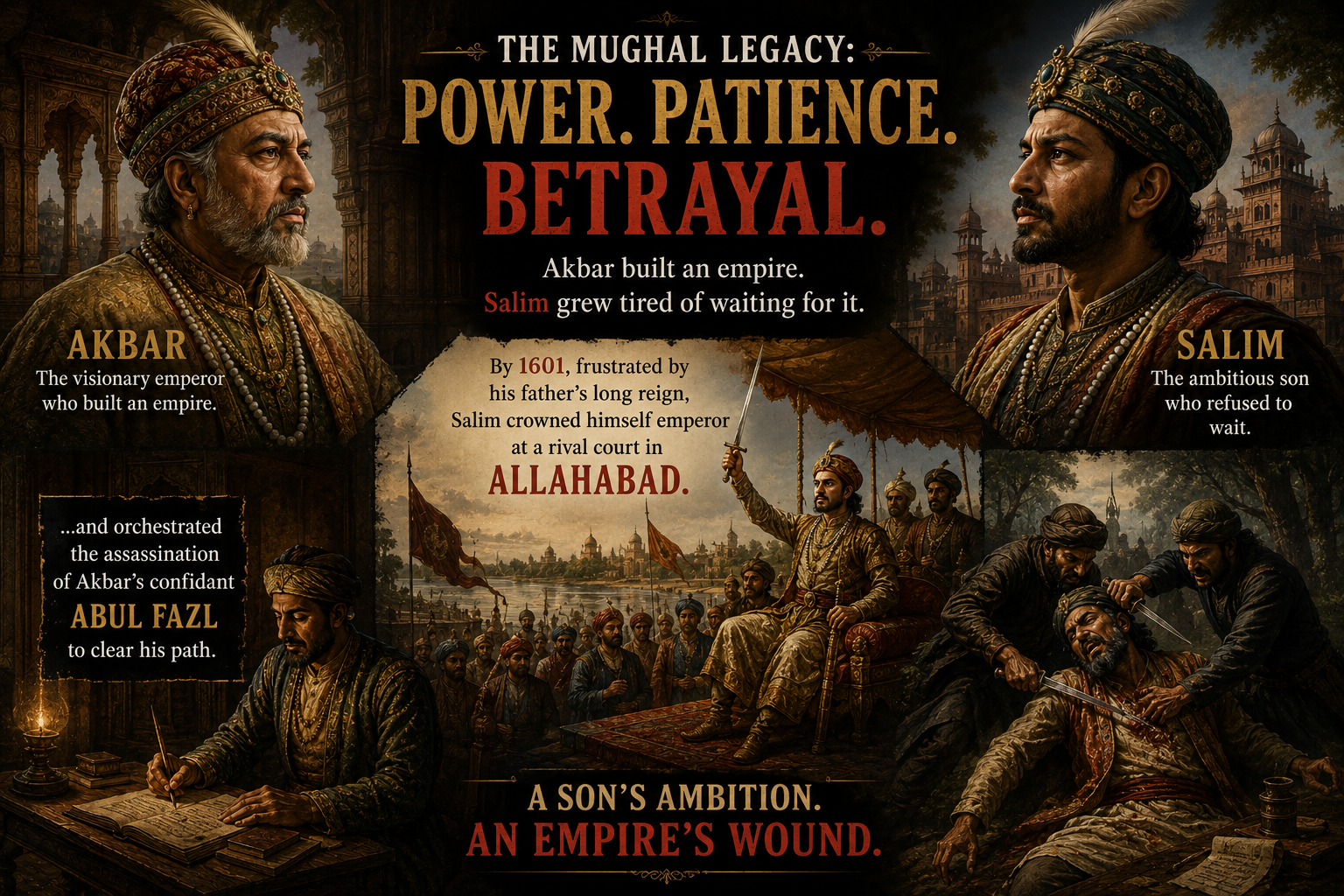
The mughal lineage is famously fraught with succession conflicts.Akbar built an empire; his son Salim grew tired of waiting for it. By 1601, frustrated by his father's long reign, Salim crowned himself emperor at a rival court in Allahabad — and orchestrated the assassination of Akbar's confidant Abul Fazl to clear his path.
Although father and son reconciled before Akbar's death, but the wound never fully closed. Jahangir had risen by rebelling against Akbar; in 1622, his own son Khurram returned the favor, fearing Jahangir's powerful wife Nur Jahan would sideline him from succession. The revolt failed, and Khurram submitted — proof the throne taught every generation the same lesson in betrayal.
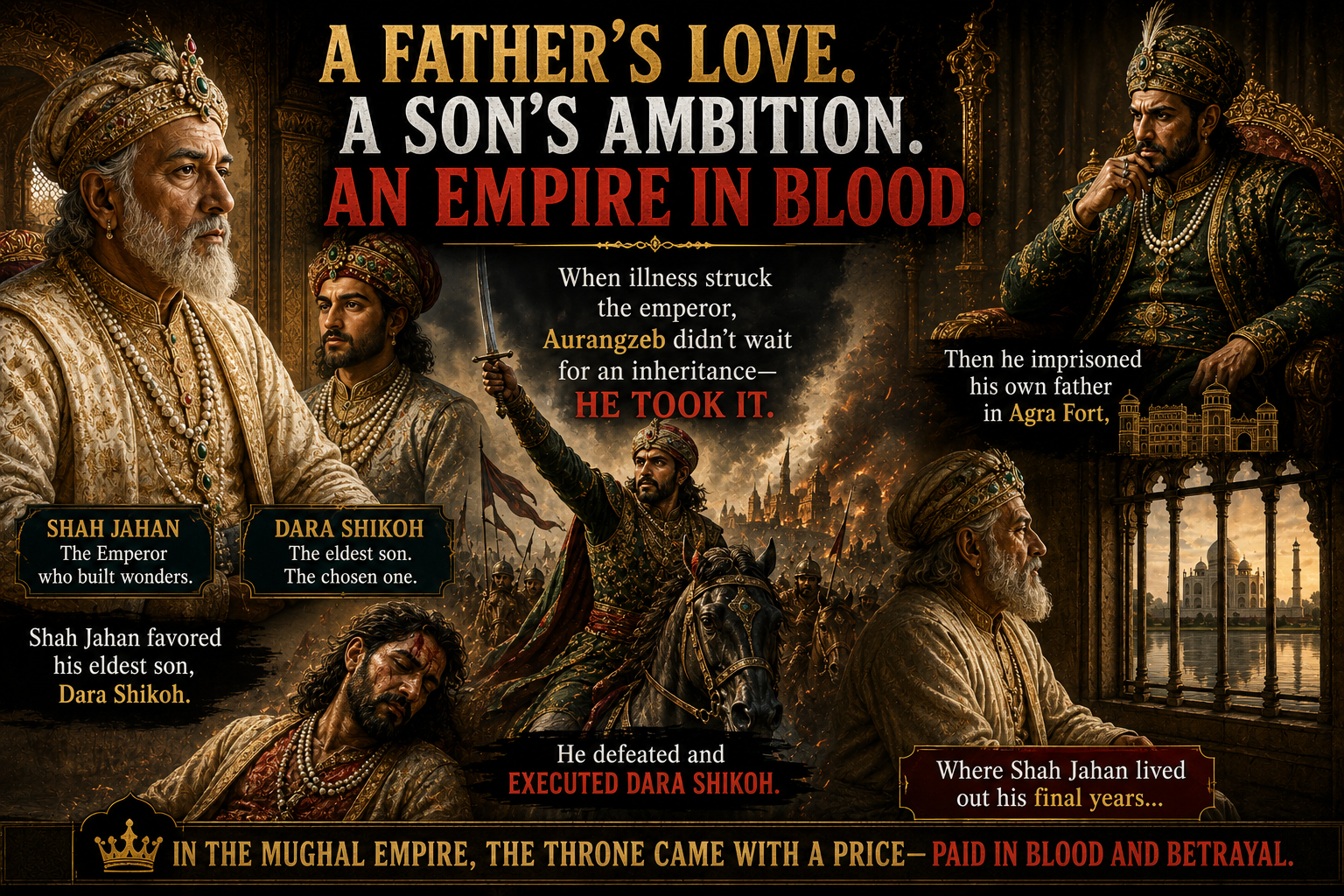
Shah Jahan favored his eldest son, Dara Shikoh. When illness struck the emperor, Aurangzeb didn't wait for an inheritance — he took it, defeating and executing Dara, then imprisoning his own father in Agra Fort, where Shah Jahan lived out his final years.
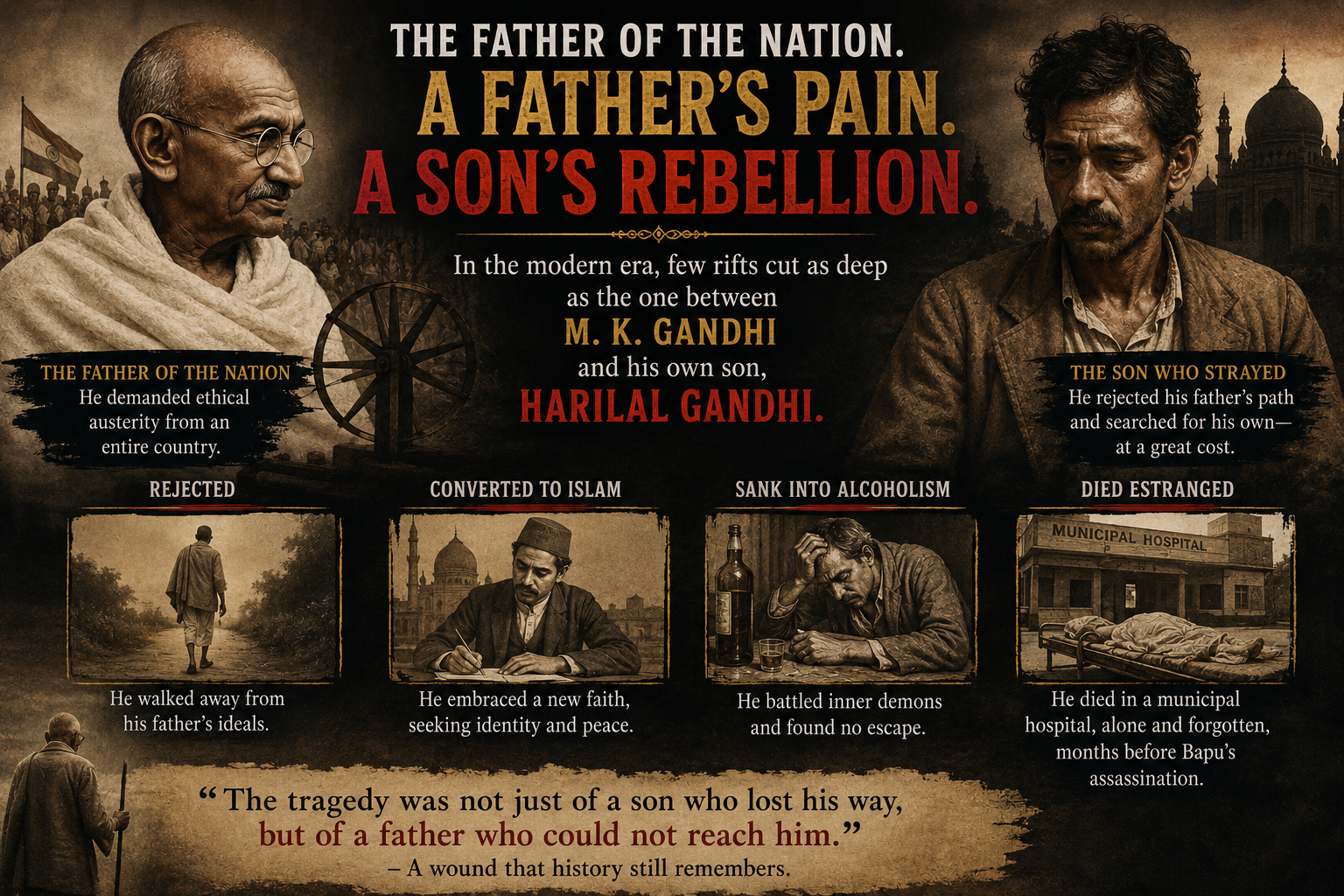
In the modern era, few rifts cut as deep as the one between the Father of the Nation and his own son. Harilal Gandhi rejected the ethical austerity his father demanded of an entire country, converted to Islam, sank into alcoholism, and died estranged in a municipal hospital months before Bapu's assassination.
As Huxley put it, sons have always a rebellious wish to be disillusioned by what charmed their fathers. Read together, these aren't isolated betrayals — they're a single, recurring inheritance. Akbar rebelled against his father; his son rebelled against him; his grandson did the same to his own father.
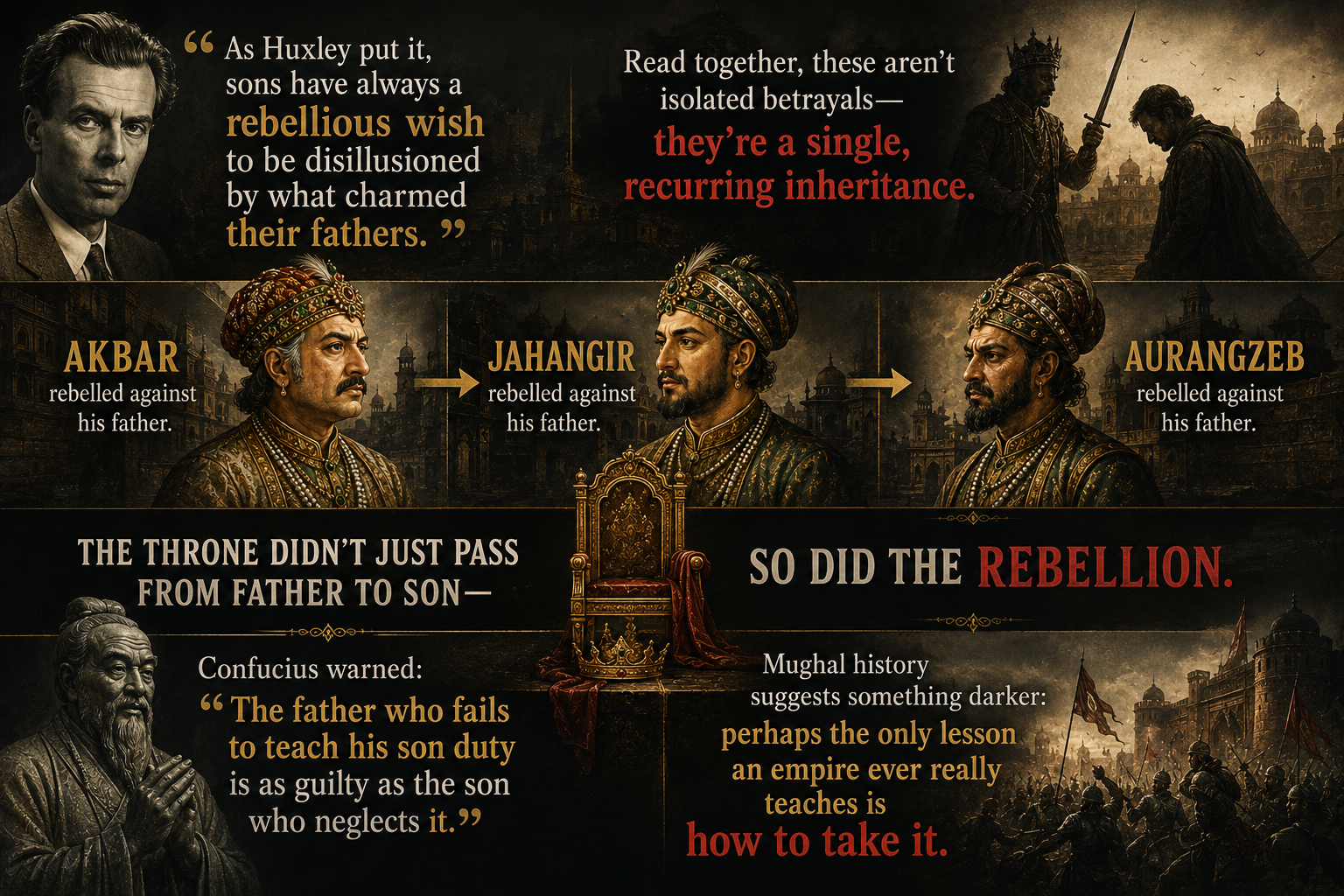
The throne didn't just pass from father to son — so did the rebellion. Confucius warned that the father who fails to teach his son duty is as guilty as the son who neglects it. Mughal history suggests something darker: perhaps the only lesson an empire ever really teaches is how to take it.
Note:(pics from internet for illustration only)
Comments (7)