Don't Sweat the Small Stuff — A Stoic Inheritance!


There is a book by that name. It became a phenomenon.
But my father never needed to read it. He lived it. He would walk into a room and the room would change. Not because he was loud — though he could be — but because he carried himself as if he had already made peace with every outcome. Shoulders back.Chin level. Stand up tall, stand up straight, he would say, and he didn't mean posture.
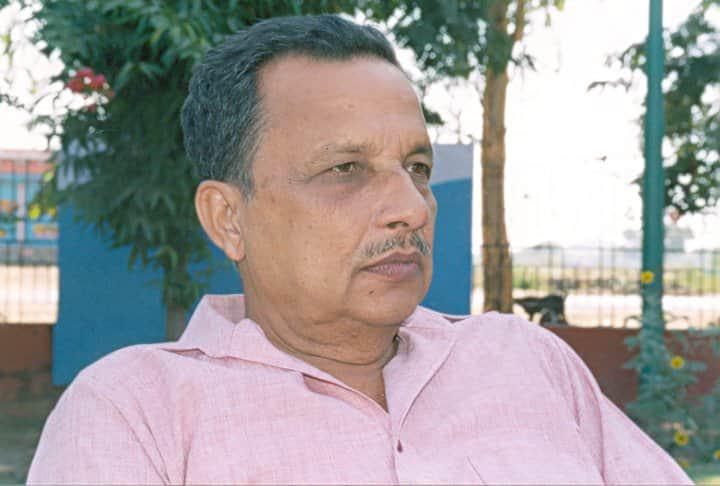
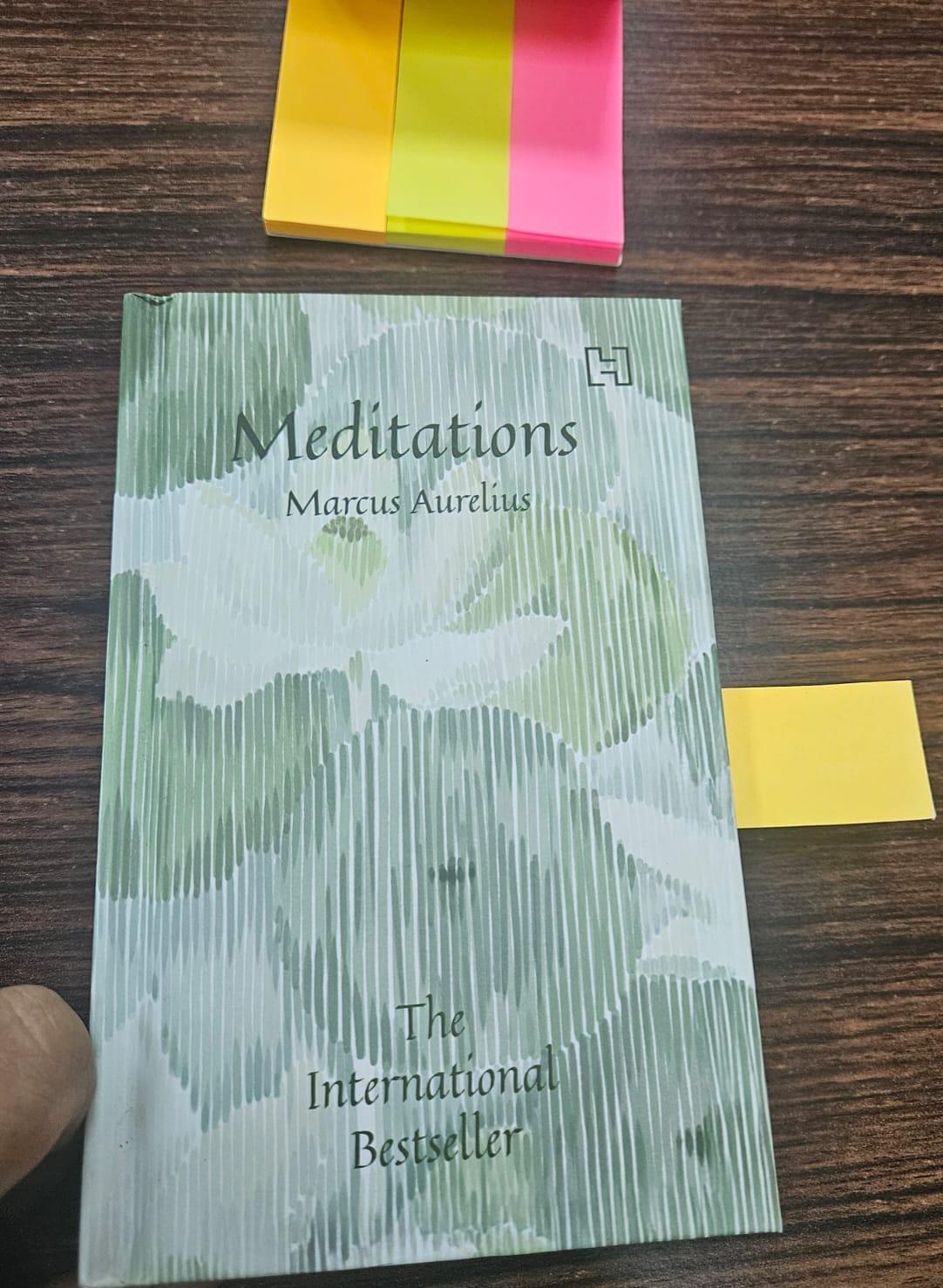
He meant something closer to what Marcus Aurelius meant when he wrote about maintaining an inner citadel — an untouchable core that the world's chaos simply could not breach.My father loved Marcus Aurelius. A Roman emperor who wrote philosophy not for publication but for himself, in private notebooks, as a daily discipline.
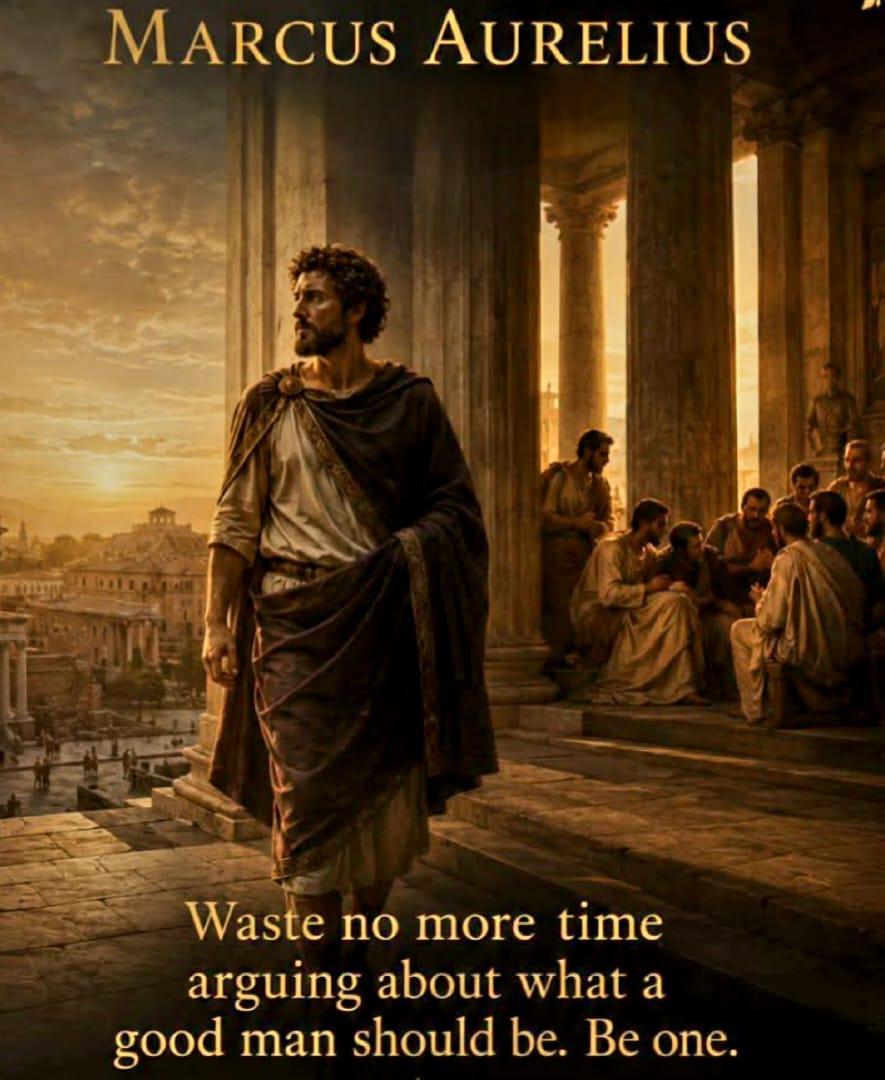
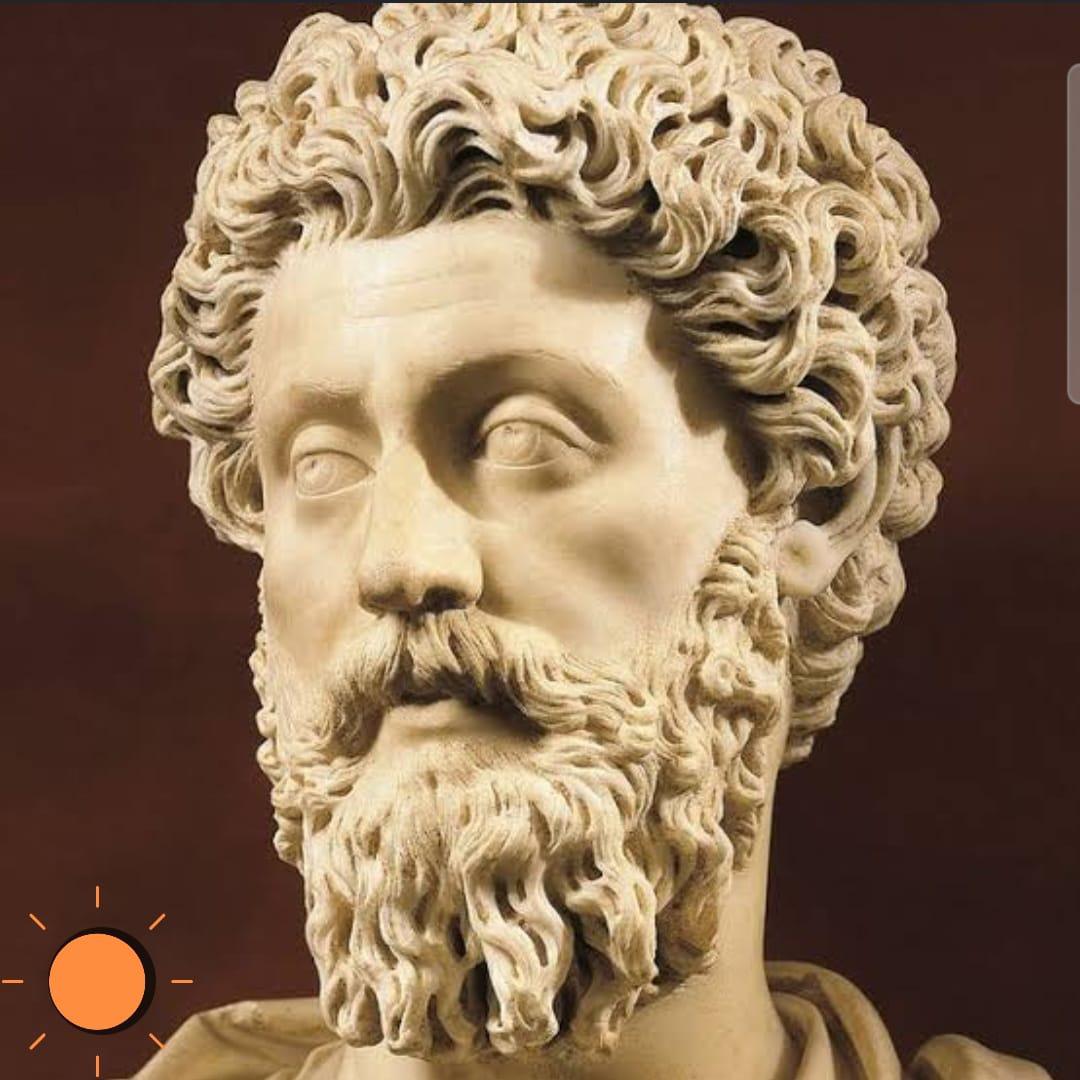
A man of colossal power who constantly reminded himself that power was nothing compared to character. I think my father recognized a kindred spirit — not in the emperor's throne, but in his bearing. The way a man can stand at the center of turbulence and remain, himself, still.
The Stoic Geometry of "Small Stuff" The Stoics built their entire philosophy on a single, radical distinction: the difference between what is up to us and what is not up to us. Epictetus called it the dichotomy of control — arguably the most clarifying idea in the history of human thought.
What is up to us? Our judgments. Our intentions. Our response to events.What is not up to us?
Everything else. Weather. Other people's opinions. Outcomes. Time. Loss.Now here is the Stoic secret buried in my father's casual wisdom: almost everything that we sweat over belongs entirely to the second category. The slight at work. The traffic. The ingratitude. The rude stranger. The deal that fell through. The recognition that never came. Sweat-worthy in the moment, yes — but measured against what? Against a life? Against mortality? Against the turning of the earth?
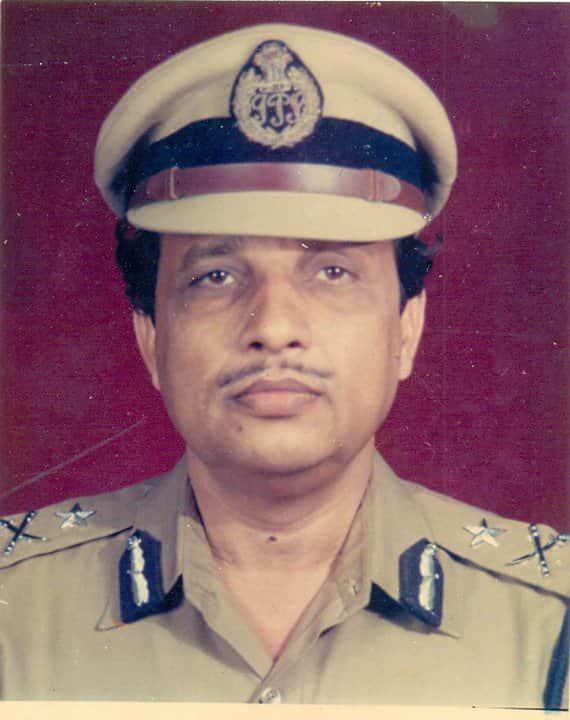
When my father said don't sweat the small stuff, he wasn't being dismissive. He was being precise. He had done the Stoic calculus and found that the denominator — a well-lived life, a life of consequence and love and meaning — made nearly every numerator vanishingly small. In the end it's all small stuff. That second sentence is the one that carries the philosophical weight. It isn't nihilism. It is the opposite. It is a call to perspective so radical it becomes liberation.
The Arrogance of Intellect, and the Strange Road to Compassion My father taught me something that sounds like a contradiction until you live it: a certain arrogance of intellect — the refusal to accept lazy thinking, received opinion, comfortable smallness — can paradoxically open a person to the margins, to the marginalized, to those the world has pushed to its edges.
The Stoics understood this. They were, for their time, startlingly egalitarian. Epictetus was a slave before he was a philosopher. Marcus Aurelius — the most powerful man in the known world — wrote, privately, that all humans share in the same logos, the same reason, the same divine spark. The Stoic cosmopolitanism — the idea that we are all, first, citizens of the world — was radical then. It remains radical now.
My father's intellectual arrogance was never about looking down. It was about refusing to look away. When you are genuinely unafraid of ideas — when you have internalized the Stoic discipline of examining everything, accepting nothing merely because it is comfortable or conventional — you find yourself face to face with injustice in a way that the intellectually timid never quite are. The comfortable can always find a reason not to look. The fearless cannot unsee. And fearlessness — this is another Stoic inheritance. The Stoics practiced a discipline called premeditatio malorum: the premeditation of evils. They would deliberately imagine loss, failure, death — not to become morbid but to become unshakeable. A man who has already faced his fears in the quiet of his own mind cannot be easily terrorized by life. He has done the reckoning. He walks, therefore, without that low-grade panic that makes so many people cruel, so many people closed, so many people dismissive of those who suffer.
My father's fearlessness made him large-spirited. He could afford compassion. He had nothing to protect.Standing Straight: The Stoic Body and the Stoic Soul Stand up tall, stand up straight. There is something the Stoics knew that modern psychology has only recently begun to confirm: the body and the mind are not separate. How we carry ourselves shapes how we think. Marcus Aurelius wrote about preserving his daimon — his inner spirit — pure and undisturbed. But he also wrote about action, about engagement, about showing up fully to each moment.
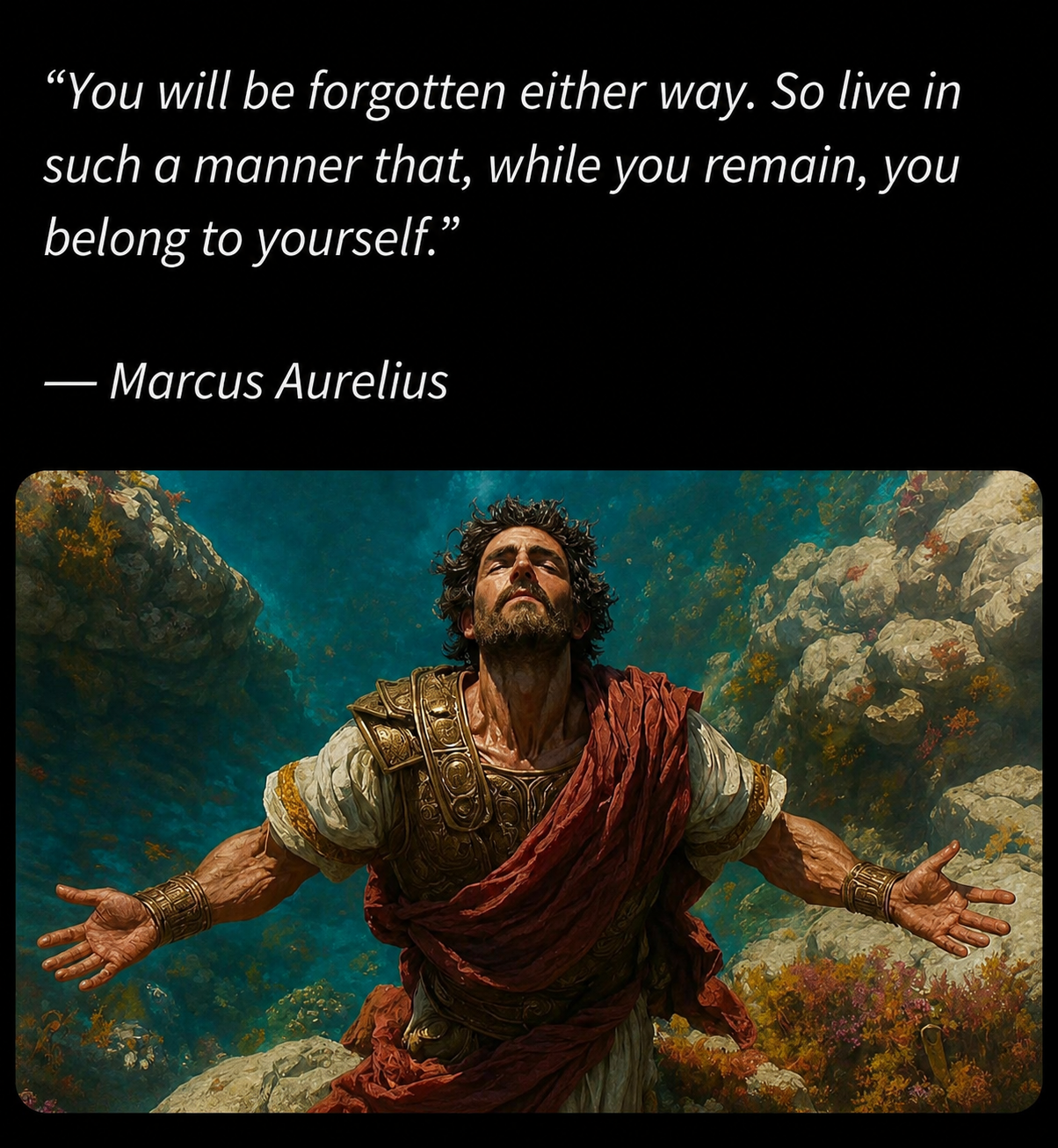
To stand up straight is to refuse the Stoic vice of thumós unrealized — the shrinking of oneself to accommodate the pettiness of circumstance. It is to say, with the body, what the philosophy says with the mind: I am here. I am present. I will not be diminished by what does not deserve the power to diminish me.
My father stood straight because he had decided, somewhere deep in his character, what mattered. And once you have made that decision — once you have, like the Stoics, separated the essential from the accidental — you find that very little has the right to bend you.
A Grand Life, Stoically Understood He lived big. A grand life, in the truest sense — not grand as in gilded, but grand as in expansive. A life that made room for ideas, for people, for Marcus Aurelius in one hand and genuine empathy in the other.The Stoics were not cold. This is the great misunderstanding. They were not about suppression but about right proportion — giving each thing exactly the weight it deserves, no more and no less. Grief its season. Joy its full expression. Principle its absolute defense. Triviality its appropriate — which is to say, minimal — attention.
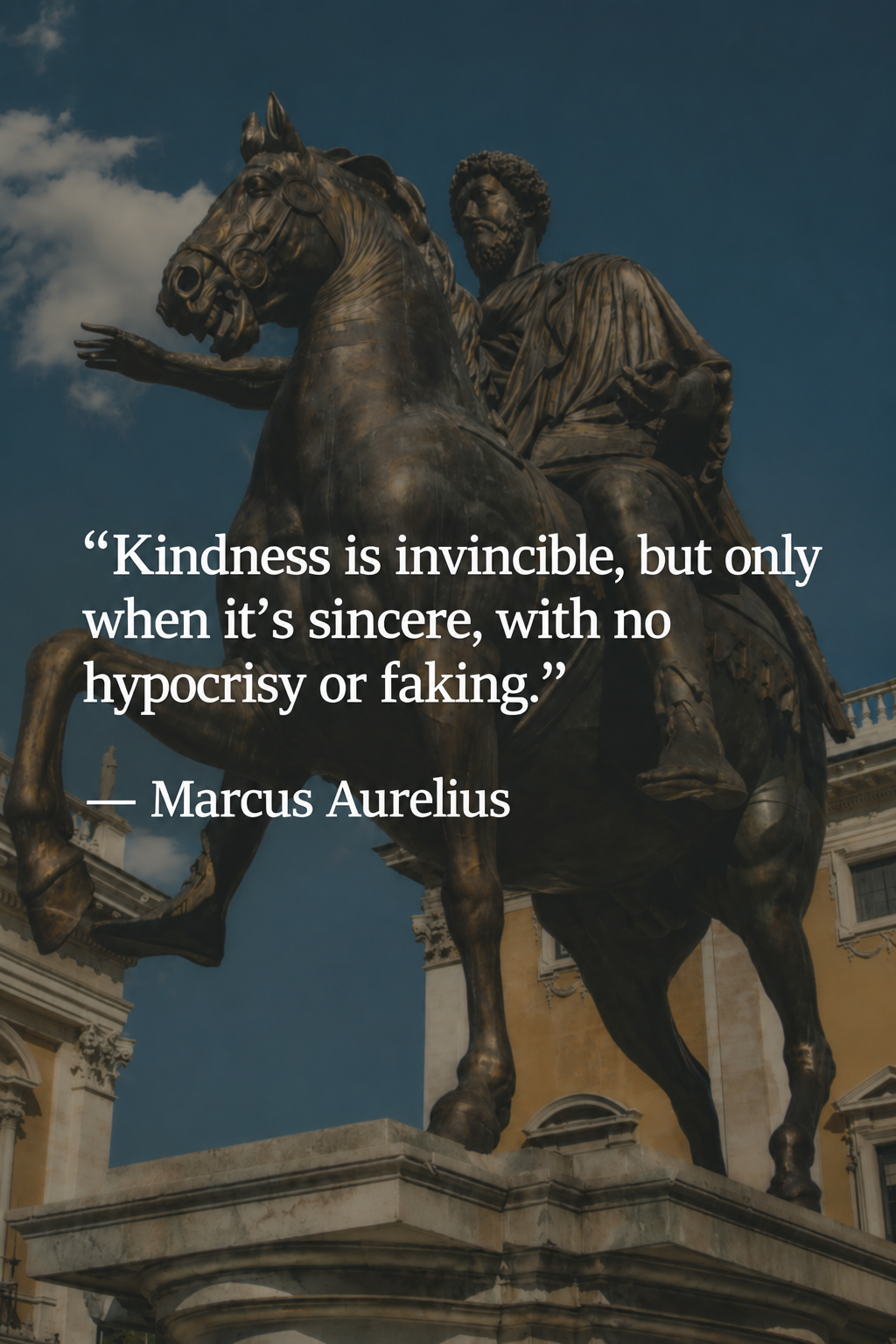
Don't sweat the small stuff is not stoic resignation. It is Stoic attention — the radical redirection of your finite, precious human energy toward what is genuinely worth it. Toward the people you love. The ideas that matter. The injustices worth fighting. The life worth building.And in the end? In the end, even the large things — even the life itself — become, in the long view of time, small. The Stoics knew this too. Marcus Aurelius knew it, writing in his tent at the edge of the empire, in a notebook no one was supposed to read: how many a Chrysippus, how many a Socrates, how many an Epictetus, time has already swallowed them up.We are temporary. The Stoic response to that is not despair. It is intensity. Live as if it matters — because it does — while holding the whole of it lightly, because in the long arc of things, even the grand life is a brief, bright flame.
Stand up tall. Stand up straight. Don't sweat it. My father knew something the philosophers took volumes to say, because He lived that life.
Note:(pics from internet for illustration only)

-SunheriSufi
Comments (19)