Savitri: The Epic That Wrote Its Author!


(On Sri Aurobindo’s Supreme Work — Its Brilliance, Its Power, and Why It Matters)
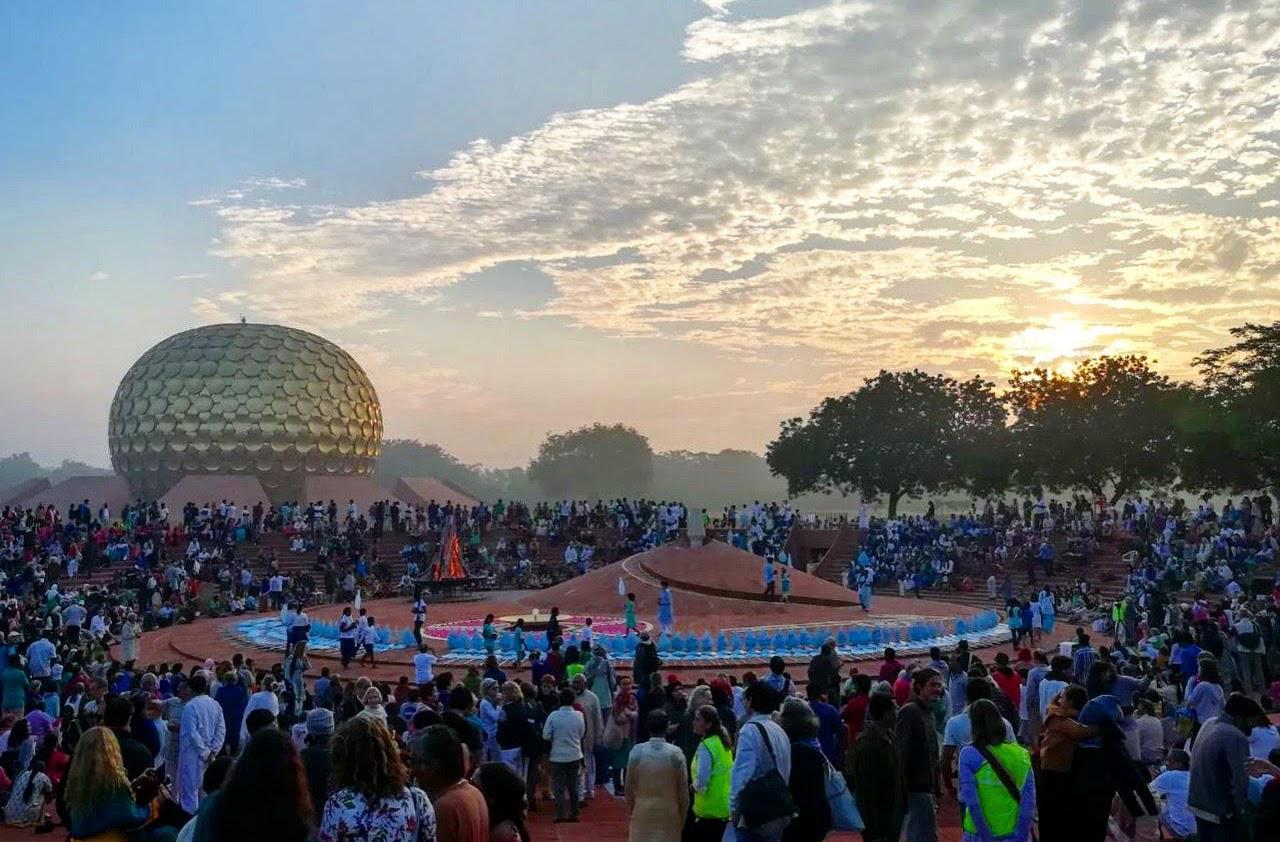
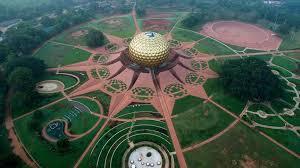
A couple of years ago, I found myself in Auroville -- that strange, luminous township in Tamil Nadu that exists, officially, as an experiment in human unity, but feels in practice like something harder to name.
It was not my first visit. When I was a child, Pondicherry was a favourite vacation destination with family; not only was it picture perfect but also because my parents’ close friends-- the celebrated Odiya author Manoj Das and his wife Pratigyan Devi who lived in the 'white town' side of pondicherry.
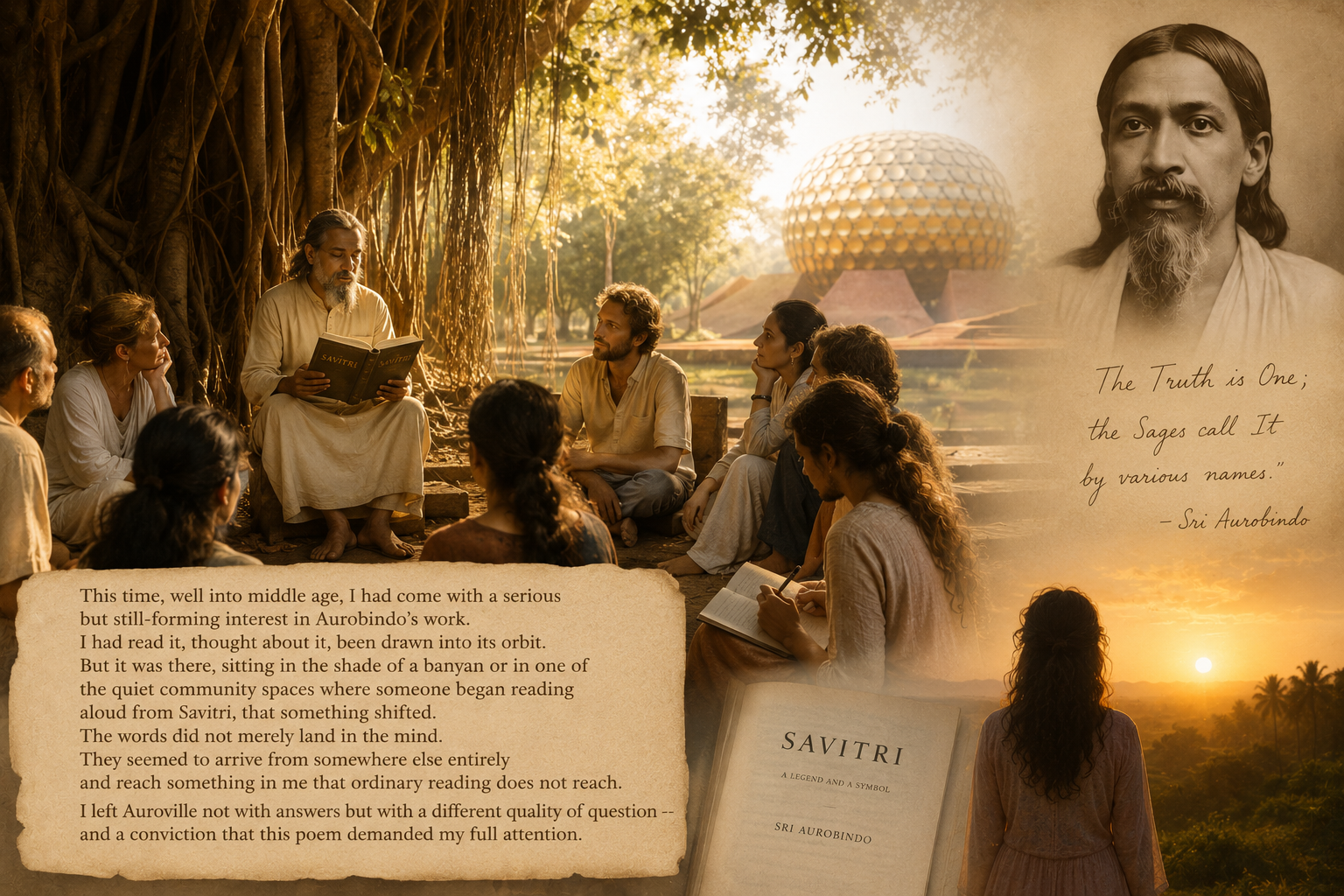
This time, well into middle age, I had come with a serious but still-forming interest in Aurobindo’s work. I had read it, thought about it, been drawn into its orbit.
But it was there, sitting in the shade of a banyan or in one of the quiet community spaces where someone began reading aloud from Savitri, that something shifted. The words did not merely land in the mind. They seemed to arrive from somewhere else entirely and reach something in me that ordinary reading does not reach. I left Auroville not with answers but with a different quality of question -- and a conviction that this poem demanded my full attention.
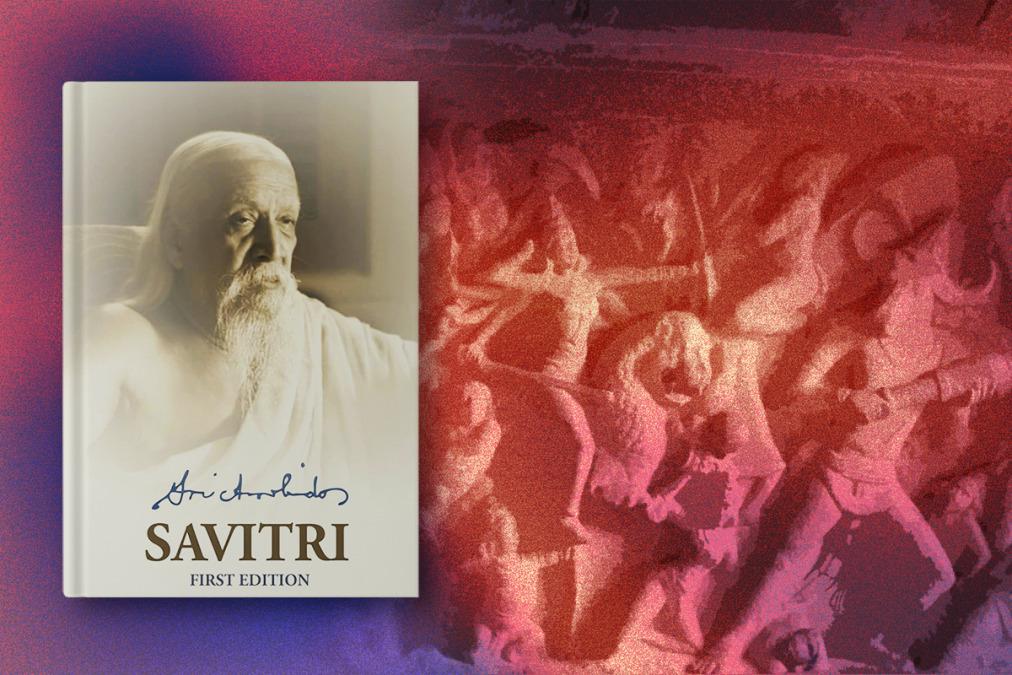
Sri Aurobindo did not choose the Savitri legend casually. In the Mahabharata, it is a brief episode -- a young woman who, through sheer force of love and wisdom, follows Death itself and argues her husband back to life. For most readers it is a beautiful folk tale of devotion.
For Sri Aurobindo, it was a symbol of something far vaster: the soul’s refusal to accept the reign of mortality, ignorance, and darkness as final. It was the story of consciousness itself defeating its own limits.
He began rewriting it around 1916 as a relatively short poem. He could not have known then that it would consume the next three and a half decades of his life -- that he would return to it obsessively, rewriting passages dozens of times, expanding it from hundreds of lines to nearly 24,000, until it became the largest epic in the English language. The poem did not simply grow in length. It grew in depth, in luminosity, in the density of consciousness it carried. It became something unprecedented in the history of literature.
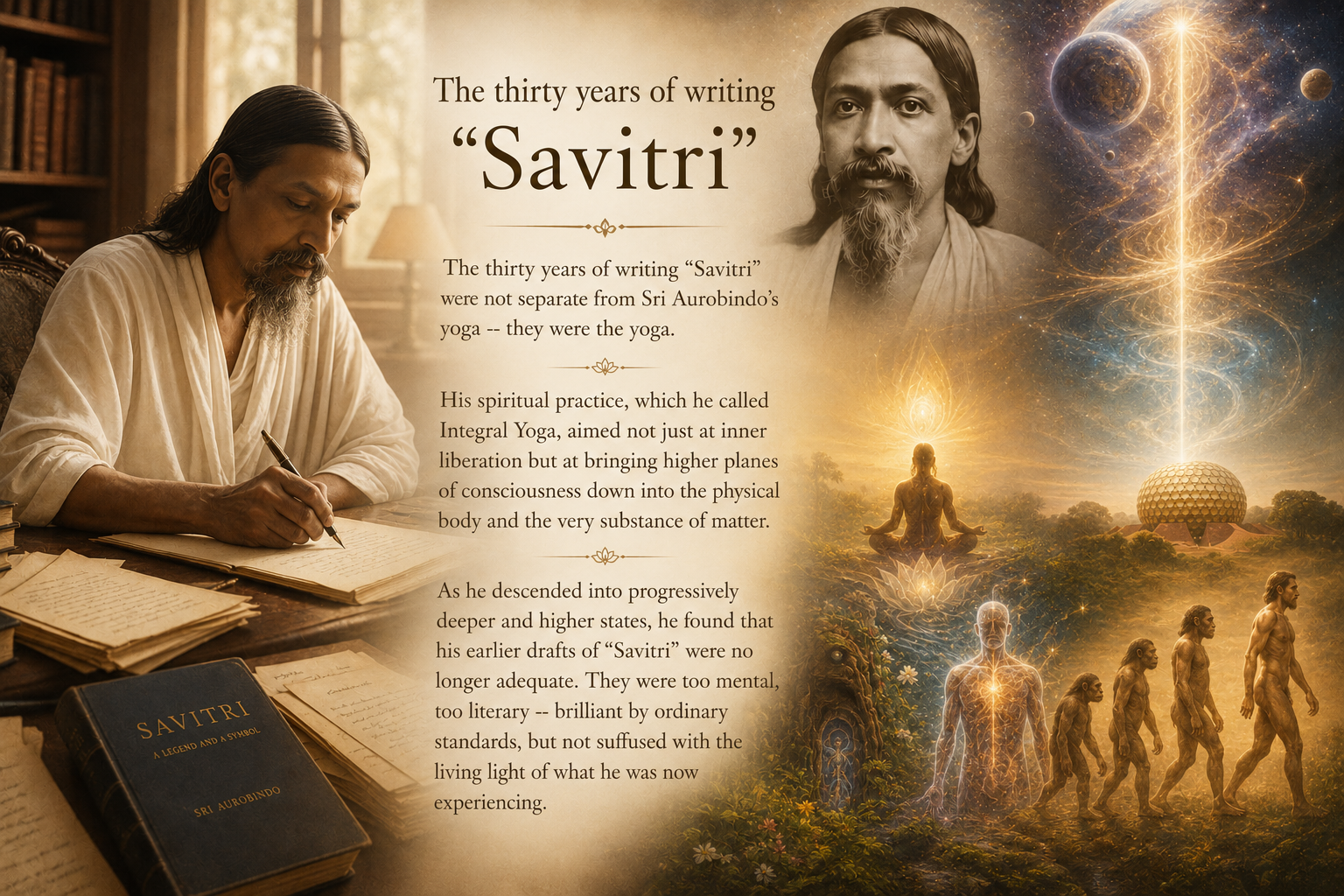
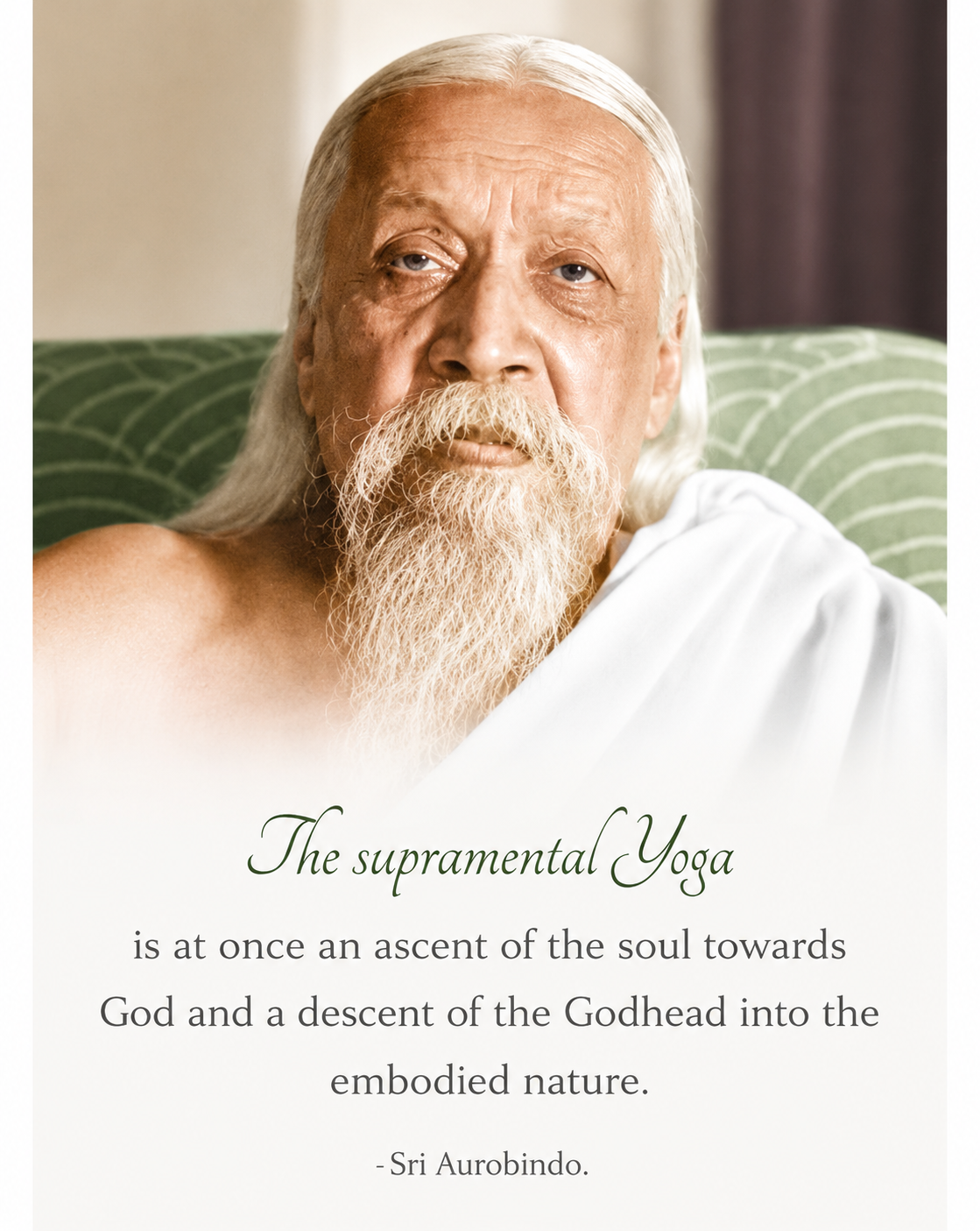
The thirty years of writing “Savitri” were not separate from Sri Aurobindo’s yoga -- they were the yoga. His spiritual practice, which he called Integral Yoga, aimed not just at inner liberation but at bringing higher planes of consciousness down into the physical body and the very substance of matter. As he descended into progressively deeper and higher states, he found that his earlier drafts of “Savitri” were no longer adequate. They were too mental, too literary -- brilliant by ordinary standards, but not suffused with the living light of what he was now experiencing.
He would rewrite entire cantos from scratch, not to improve the poetry, but because a new capacity had opened in him and the old words could not hold it.
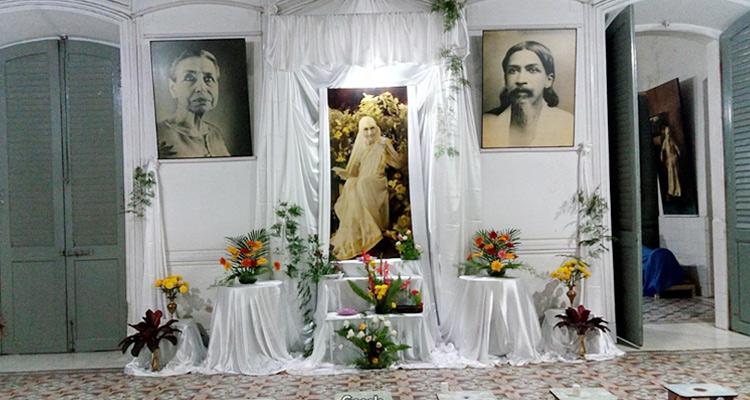
The Mother -- his spiritual collaborator Mirra Alfassa -- described this process precisely: Aurobindo was not composing Savitri in the ordinary sense. He was transcribing what he directly saw and felt in states of supramental consciousness. The poem was a record of inner territory that had been actually traversed.
In Auroville, this is not treated as metaphor or hagiography. It is accepted as a working reality -- which is why “Savitri” is read there not as literature to be admired but as a living text to be entered. Hearing it read aloud in that place, you begin to understand why.
The evolution is visible if you read the early and late versions side by side. The early Aurobindo is dazzling -- the Cambridge-trained mind, the classical metres, the philosophical precision. The later Aurobindo is something else entirely: the intellect has not been abandoned but surpassed. The language becomes a kind of light-bearing instrument. By the time of his final revisions in the late 1940s, Savitri had become, in a very real sense, the autobiography of a consciousness that had pushed past all known human frontiers.
“Savitri” is extraordinary as poetry quite apart from its spiritual dimensions. Aurobindo works in blank verse — a form demanding enormous control -- and wields it with a mastery that stands comparison with Milton and Shakespeare. His images have a quality of inevitability: they do not feel invented, they feel discovered. The cosmos opens in his lines. Sun, star, ocean, abyss, fire -- all become charged with exact philosophical meaning while remaining powerfully sensory and alive.
What makes “Savitri” unlike any other epic is its range. It moves from the physical world to the innermost planes of the psyche to the architecture of the universe to the nature of the Absolute -- and it does so not abstractly, but experientially. The reader does not study these planes; they are made to feel them. There are passages in the later books -- Savitri’s confrontation with Death, the descent into the kingdoms of night -- that produce in the attentive reader something close to a shift in consciousness. I recognised that quality when I heard the poem being read aloud in Auroville. What I took initially for the atmosphere of the place, I later understood was the poem itself doing its work.
“Savitri” is not an easy read. It asks patience, attentiveness, and a willingness to be changed. But these demands are exactly its gift. In a literary culture that prizes irony, fragmentation, and disenchantment, “Savitri” stands as something almost scandalous: a great work that is unironically about the possibility of human transformation, about love as a cosmic force, about death as something that can be defeated not by escape but by exceeding it.
It also offers what almost no other text offers: a sustained, detailed,experiential map of inner space. For anyone engaged in meditative or contemplative practice -- across any tradition -- “Savitri” illuminates territories they may have glimpsed but never found described with such precision and beauty. I am still exploring it, still finding myself surprised and undone by certain passages. That is not a mark of its difficulty so much as its depth: it keeps meeting you at whatever level you bring to it, and asking you to go further.
“Savitri” is the rarest kind of book: one that grew alongside the consciousness of its author, that demanded everything of him and
received it, and that now carries within its lines something of what that encounter with the infinite opened. It does not ask to be merely read but to be entered. Those who enter it — whether through the pages alone, or through a place like Auroville where its words are still alive in the air --seldom come back entirely unchanged.
Note:(pics from internet for illustration only)
Comments (6)