The Pen That Passed the Test!


Gandhiji emphasized Swadeshi as a core strategy to achieve Swaraj (self-rule) and dismantle British colonial power.
Long back during the years of non-cooperation, when K.V. Ratnam visited Gandhiji in Wardha in 1921, he was told to make anything from pin to a pen. Ratnam took it as an instruction and went home to Rajahmundry inspired by Gandhiji. He took a fountain pen apart to learn how it was made. In 1933 he sent Gandhi a pen of his own making. It came back rejected, because some of its parts were imported.Good intentions did not count as swadeshi.
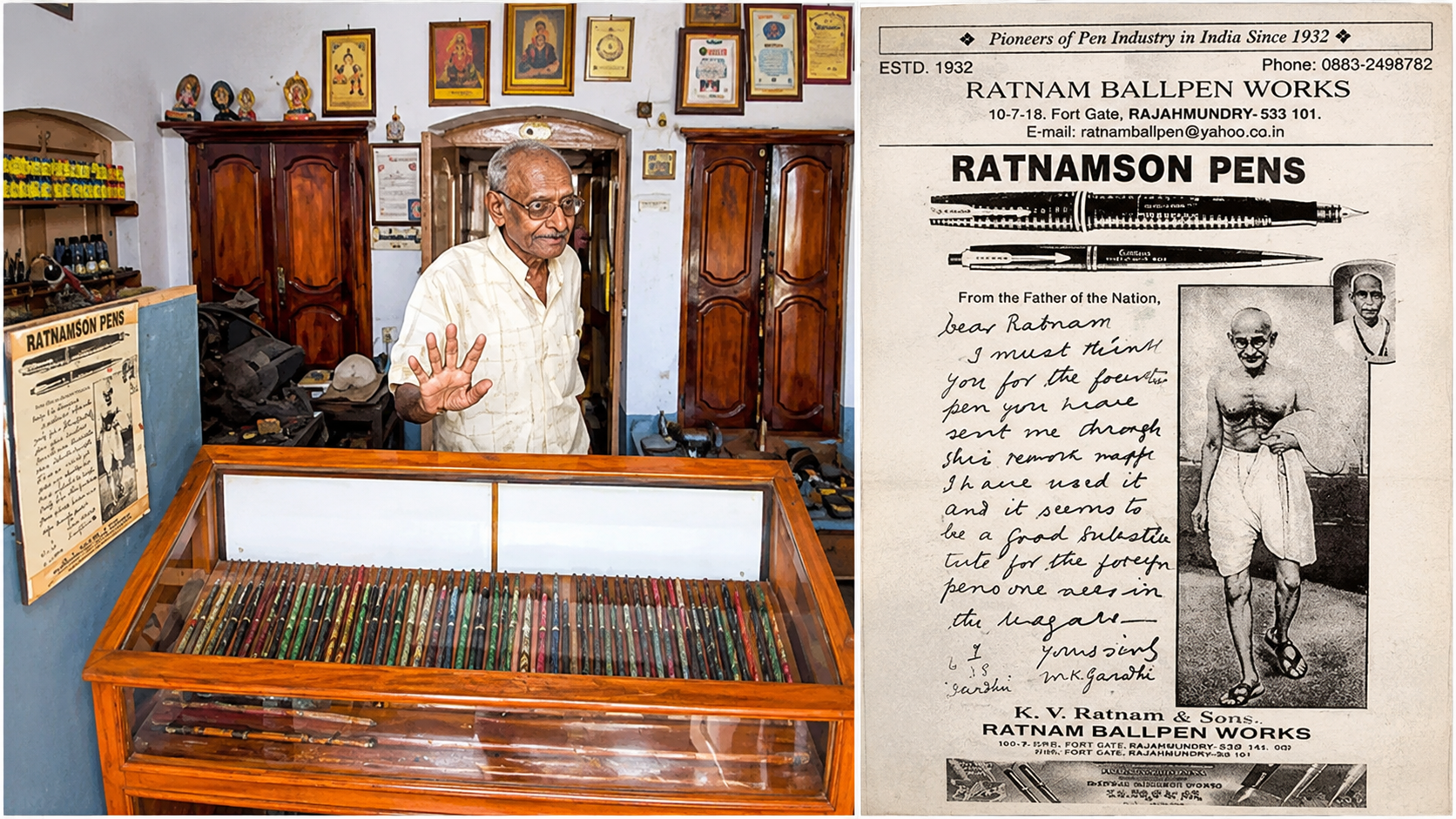
A year later, J.C. Kumarappa of the All India Village Industries Association came to Rajahmundry to help. This time the pen was Indian in every part. In 1935 Gandhi wrote from Wardha to thank Ratnam, calling it "a good substitute for the foreign pen one sees in the bazaar." The note is kept at Ratnam Ball Pen Works even now. Gandhi is reported to have written over 28,000 letters with this pen. Whatever the exact count, it was the pen that served his hand.After that, the Ratnam pen belonged to the national movement. More and more leaders reached for it.
The workshop is as humble as the history is large. Home, workshop and store front have shared one property since 1932, now split between two companies, Ratnam Fountain Pens and Ratnam Ball Pens. There are about a hundred square feet of shop front and two hundred of workroom, where the body, the nib and the ink system are all made by hand. The materials are ebonite, steel, silver and gold. Each pen takes two to three days. The gold nibs have mostly given way to high-quality steel or 14-carat gold-tipped ones, depending on the model. The pens are said to be made to order, in small batches, on the original 1932 lathes.
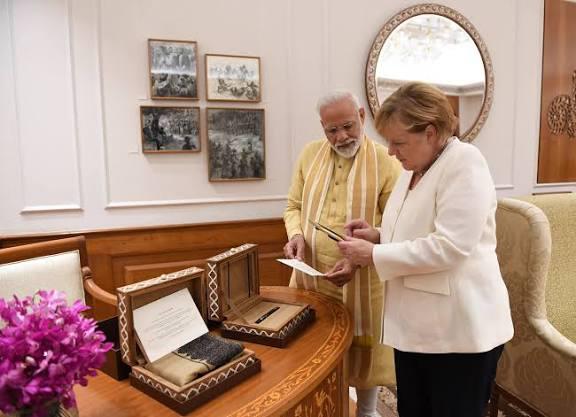
The recognition has been quiet and high. When Angela Merkel visited India in November, Prime Minister Modi gifted her a Ratnam pen, alongside a handloom woollen khadi stole from Ladakh. It is also told that a pen was made for Prime Minister Atal Bihari Vajpayee, in 22-carat silver with a custom 24-carat gold nib. Only two such pens were made, one for the Prime Minister and one for the family to keep.Montblanc, Tibaldi and Parker sell a name.
Ratnam kept a promise that Gandhi himself had tested.Freedom is made in small rooms, by people who refuse the imported part.Self-reliance is the cornerstone of building a Viksit Bharat.
Note:(pics from internet for illustration only)
- Dr.Gayatri Mohapatra
Comments (10)