The Shell of Shani: Form, Silence, and Cosmic Time!


As a child, I picked up a smooth, dark stone from a riverbank and handed it to my mother saying, "Ma, this is Shiva." She didn't laugh. She placed it in our puja room, where it is worshipped to this day. That stone taught me, before any scripture could, that divinity inhabits whatever vessel sincere recognition chooses. I thought of that stone when I found the shell.

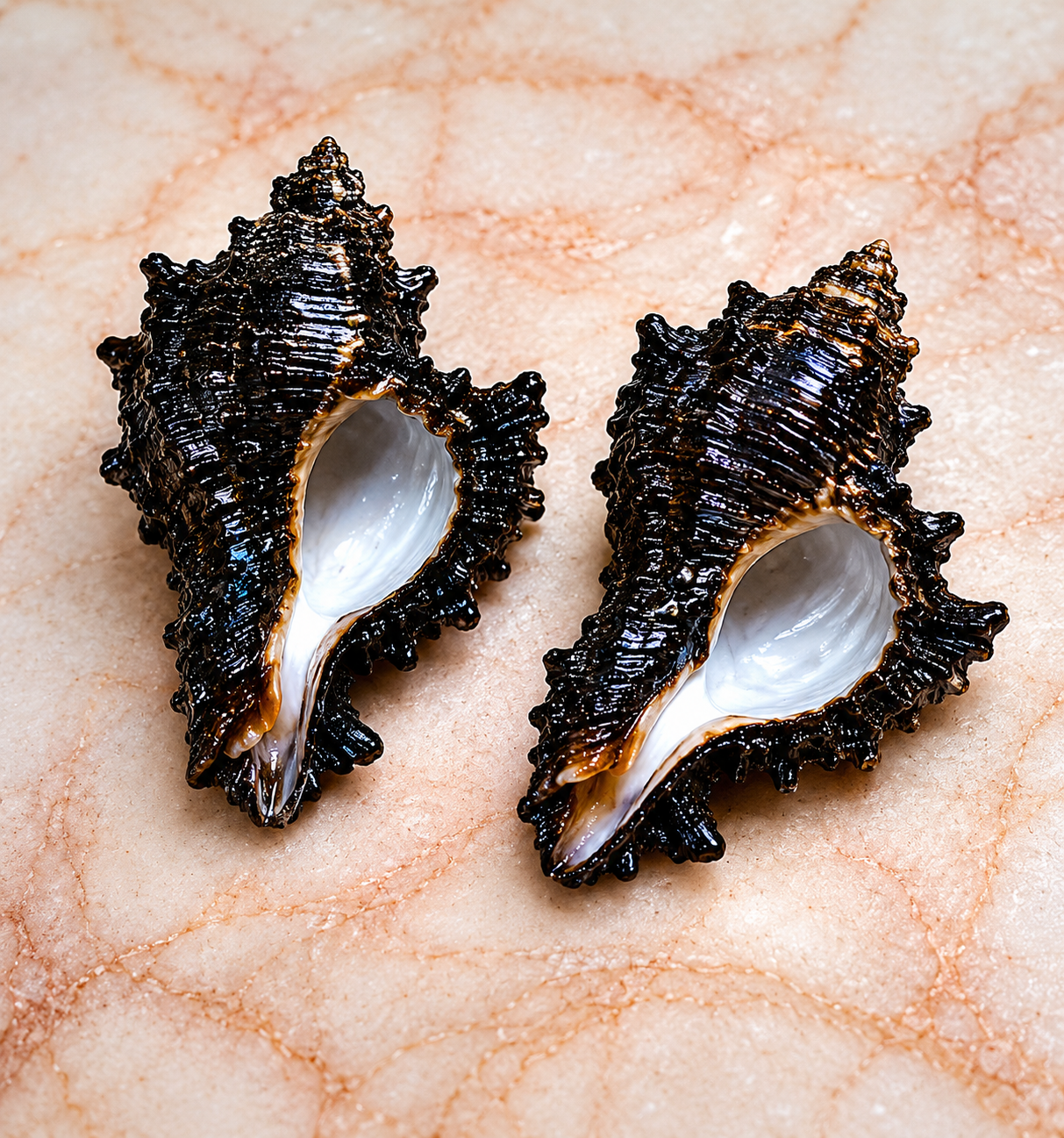
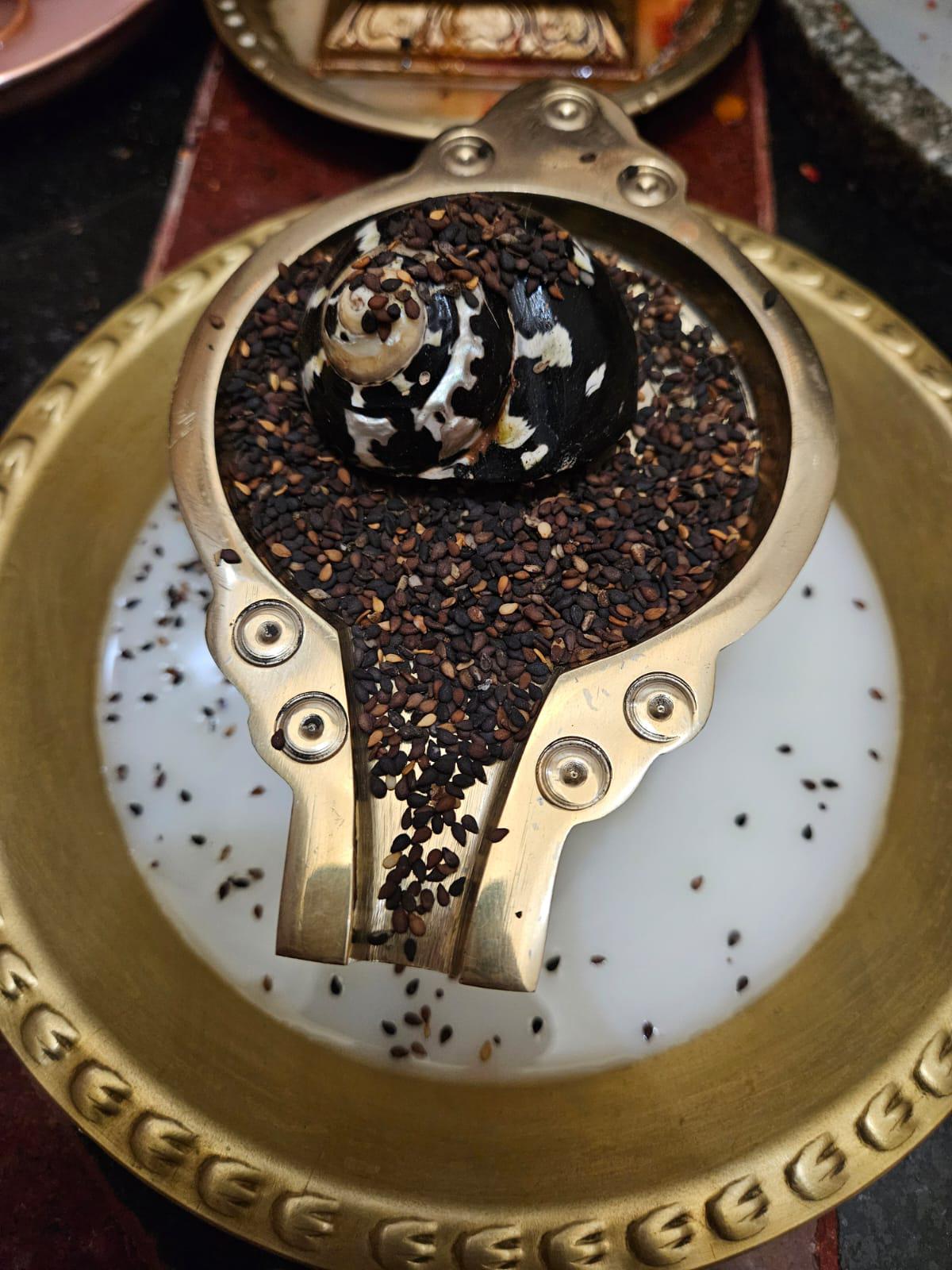
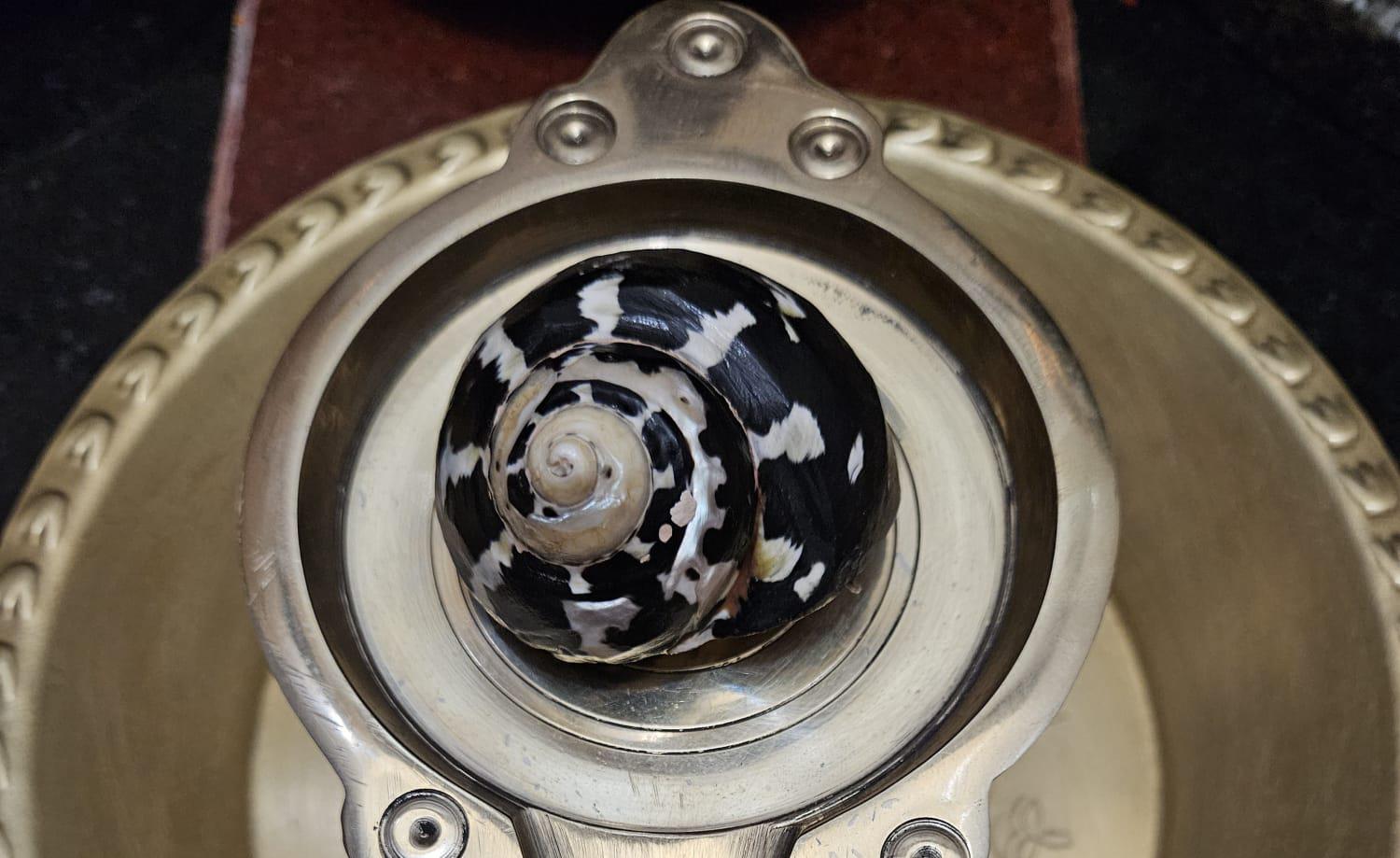
Something arrested my eye on a beach — a Turbo petholatus, a Turban snail shell from the Indo-Pacific. Deep, lustrous black scattered with irregular white markings, like light breaking through a night sky. Dense and smooth in the hand, with the weight of something that has been waiting. And in the moment of finding it, its affinity with Shani Dev became unmistakable.
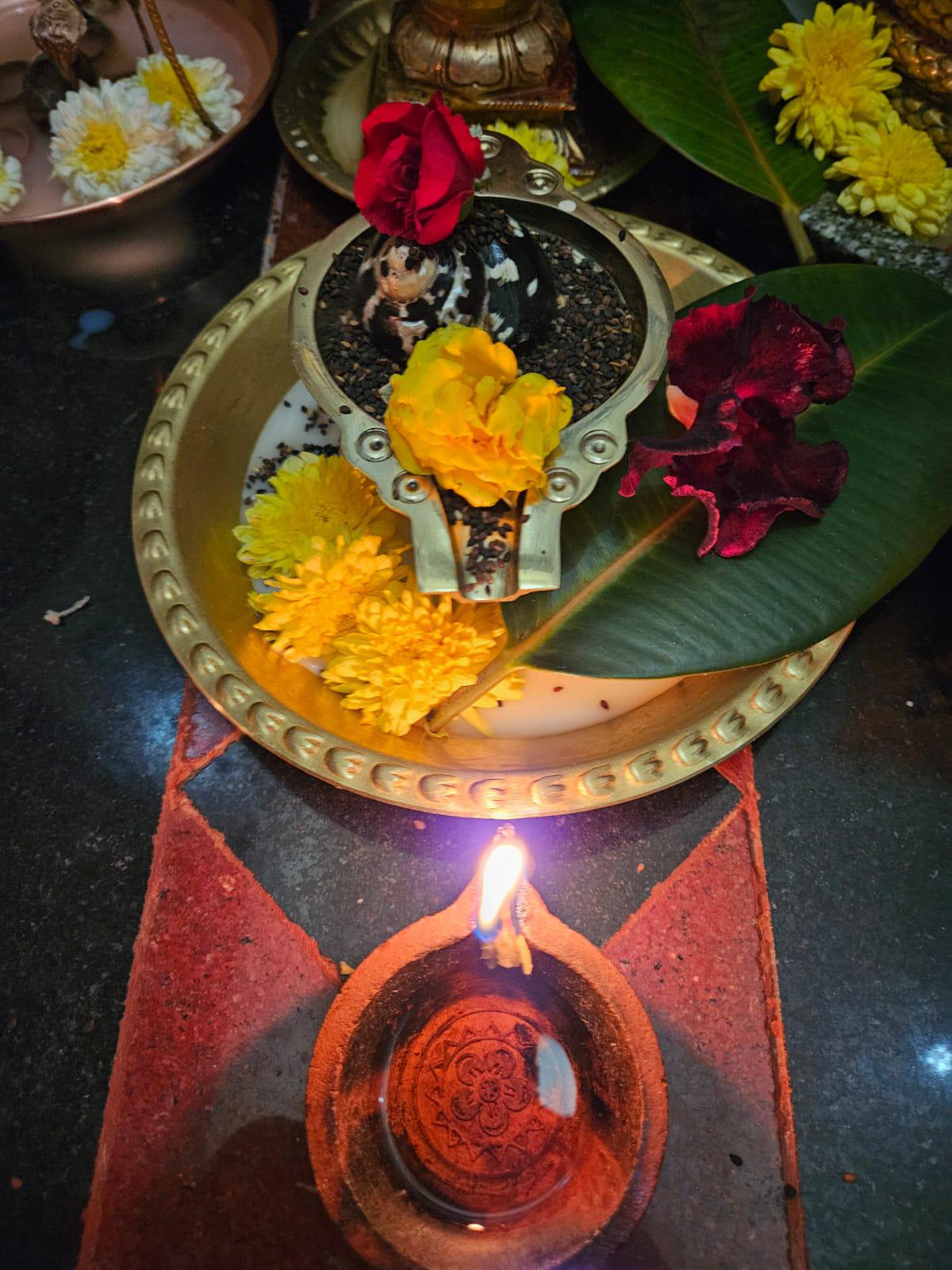
The Upanishadic vision tells us that divinity is not imprisoned within fixed forms. Sarvam Khalvidam Brahma — all this is indeed Brahman. If consciousness can invoke Shiva into a river stone, devotion can certainly perceive Shani within a shell shaped by the ocean's timeless movements. There are objects that become sacred not because scripture commands it, but because consciousness recognizes a resonance within them.
The spiral reflects karma's movement — never linear, always returning. The shell's inward-turning geometry mirrors the inward journey Shani compels: away from vanity, toward truth. Its mathematical coil echoes Saturn's own slow, inevitable revolutions.
The black is not absence — it is depth. Shani strips away illusion and prestige, demanding encounter with unadorned reality. The white markings are grace breaking through — light discovered not despite darkness, but through it. The shell's hardness speaks to Shani's domain: endurance, austerity, protection earned through difficulty.
Even its origin in the ocean is apt. In Indian cosmology, the ocean is the unmanifest — the primordial field from which forms emerge. This shell was shaped in those unseen depths over immense time, exactly as karmic destiny accumulates: invisibly, gradually, then arriving with the full authority of something always inevitable.And there is the silence. Unlike the triumphant Shankha, this shell does not announce itself. It waits. Shani, among the Navagrahas, is the great teacher of solitude and stillness. His wisdom is rarely theatrical.
Indian civilization has long perceived metaphysical meaning in natural forms — shells, spirals, river stones — revered precisely because they are untouched by human ego, shaped instead by elemental intelligence over vast time. Faith in this tradition has never been merely belief; it is recognition — seeing cosmic principles reflected in the world, and having the courage to honor what is seen.The ocean carved this shell slowly. Time shaped it patiently. Darkness gave it depth. Silence gave it dignity.In all this, it already carries the signature of Lord Shani.
Note:(pics from internet for illustration only)

-SunheriSufi
Comments (3)