The story of Silent Night!


At Christmas all roads lead home and the best part of Christmas is sharing it with family, standing heart to heart and hand in hand. Festive food, aroma of the cakes baking, carols and decorations all focus on that special 'silent and holy night' and remind us of bittersweet emotions we experienced so deeply as children.

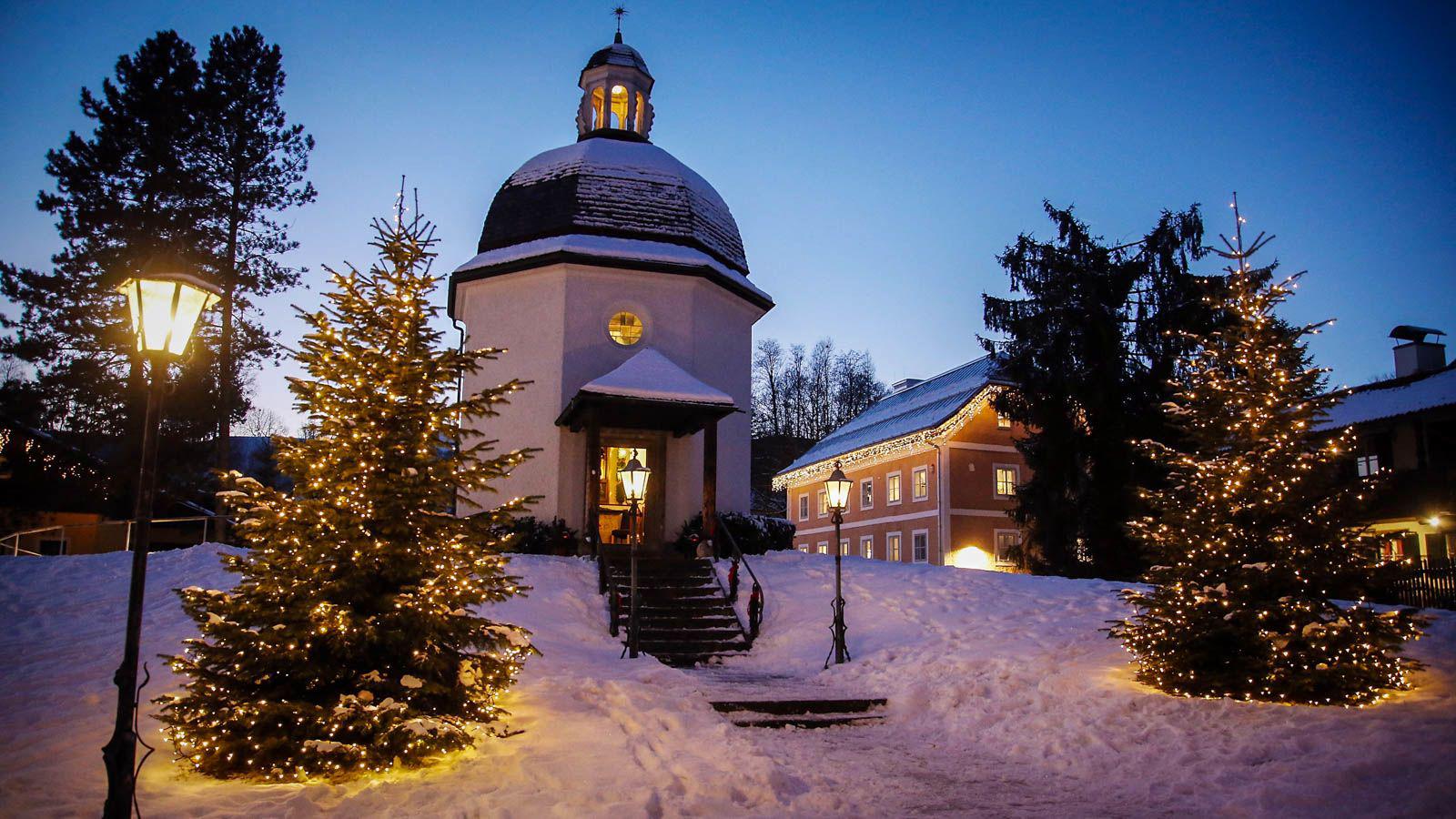
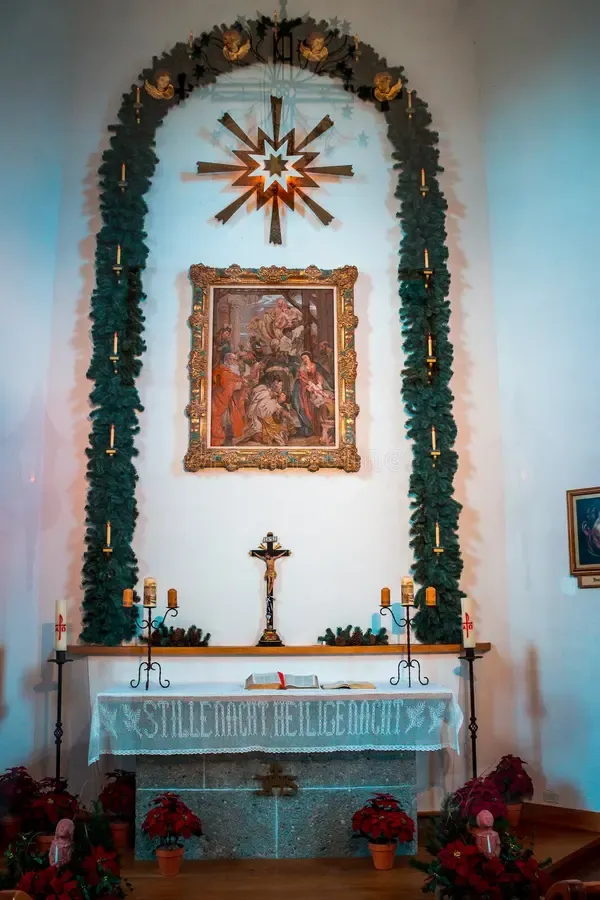
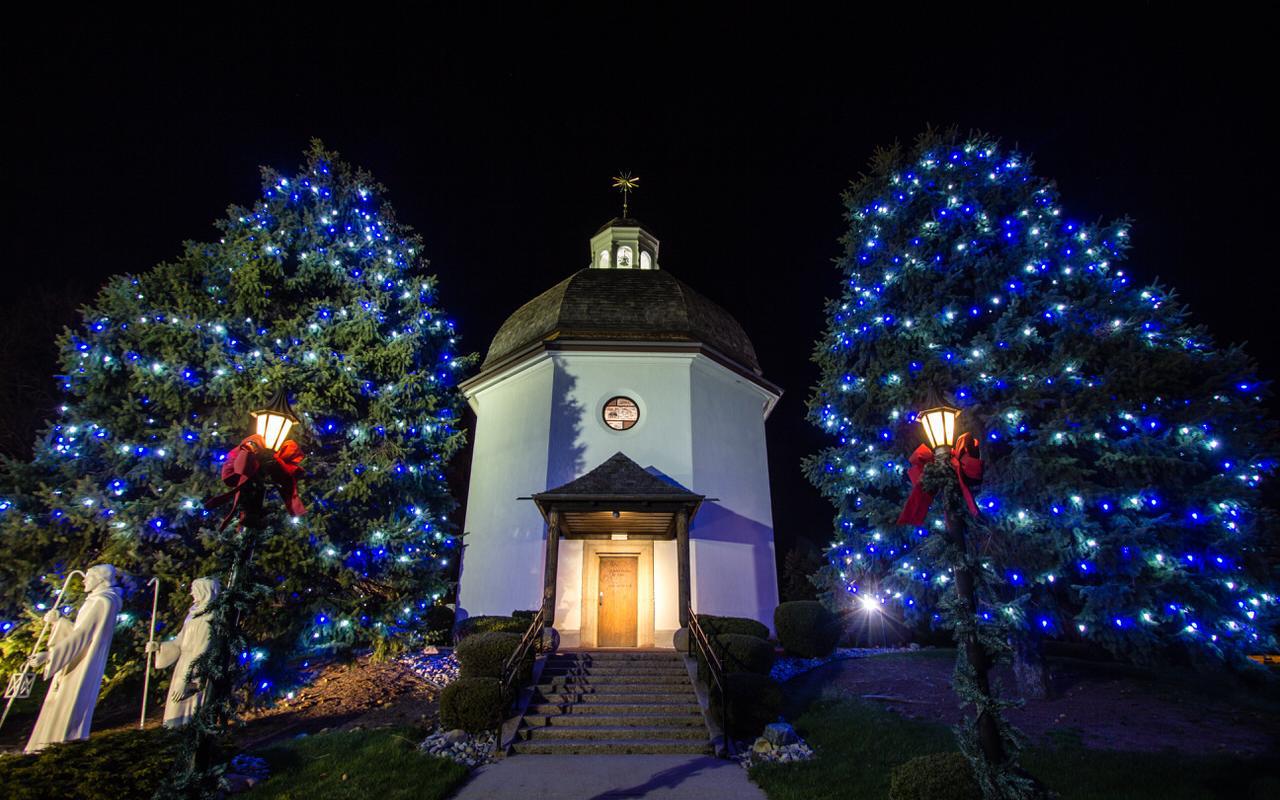
While my sister and I were traveling in Europe, we visited the small 'Silent Night Chapel' near Salzburg, Austria during Christmas. Every Christmas Eve, hundreds of people from all over the world crowd outside the octagonal-shaped chapel in Oberndorf, Austria, to sing along to one of the world’s most-beloved Christmas carols, Silent Night.
Silent night, holy night, All is calm, all is bright. Round yon virgin mother and child! Holy Infant so tender and mild, Sleep in heavenly peace, Sleep in heavenly peace.
Silent Night, or ‘Stille Nacht’ is one of the most well-known traditional Christmas carols sung around the world.
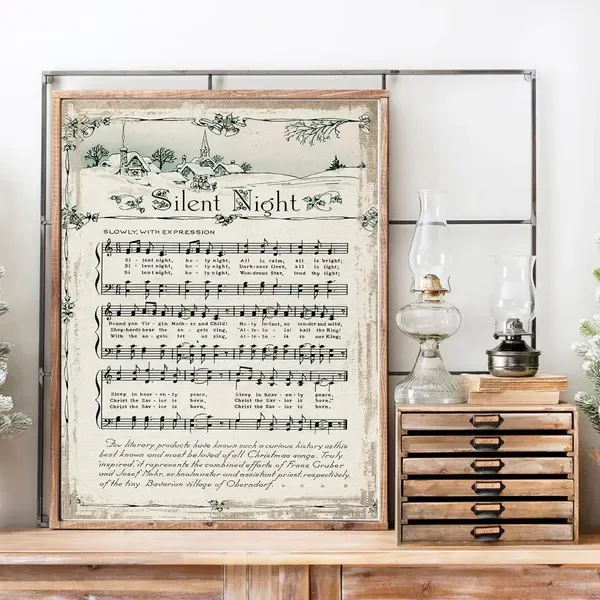
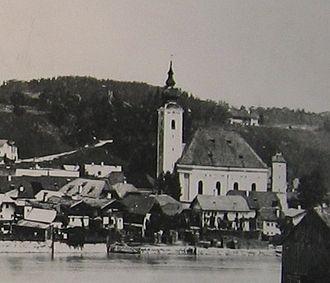
In the original German,it was first performed on Christmas Eve 1818 at the Nikolauskirche in Oberndorf, Austria. The carol began as a poem written by a young priest, Joseph Mohr, who later asked Franz Xaver Gruber, a local schoolteacher and organist, to set it to music with guitar accompaniment, possibly because the church organ had been damaged by flooding. Together, they introduced the piece at that Christmas Eve service.
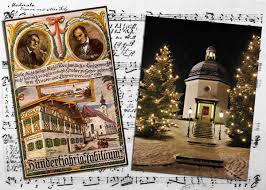
The original church was later destroyed by repeated floods and replaced by the Silent Night Chapel. Over the years, because the original manuscript had been lost, Mohr's name was forgotten and although Gruber was known to be the composer, many people assumed the melody was composed by a more famous composer, and it was variously attributed to Haydn, Mozart, Beethoven or Schubert.
However, a manuscript was discovered in 1995 in Mohr's handwriting and dated by researchers as c.1820. It states that Mohr wrote the words in 1816 when he was assigned to a pilgrim church in Mariapfarr, Austria, and shows that the music was composed by Gruber in 1818.
This is the earliest manuscript that exists and the only one in Mohr's handwriting. The inspiration for the song could be possibly the yearning for continued peace in the wake of the Napoleonic Wars, which raged from 1803 to 1815 and caused economic and other hardships in the region. Around that time, Europe also experienced the ‘Year Without A Summer’, months of colder-than-normal weather in 1816 that led to crop failures and famine, caused by a volcanic eruption in Indonesia the previous year.
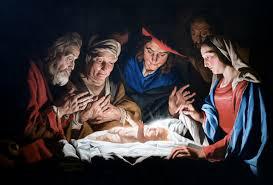
The melody of the new song was evocative of a lullaby, as were the words, describing the baby Jesus sleeping peacefully. And so the churchgoers that night heard the gentle tones of the Christmas carol ‘Silent night, holy night’ for the first time had no idea of the success the song would have over the next two centuries.
Emerging from the Zillertal Valley, the song was carried by the singing families Rainer (from Fügen) and Strasser (from Laimach). The Strasser sisters spread the carol across northern Europe. In 1834, they performed "Silent Night" for King Frederick William IV of Prussia, who liked it so much he ordered his cathedral choir to sing it every Christmas Eve. Twenty years after "Silent Night" was written, the Rainers brought the song to the United States, singing the original German version at New York City's Trinity Church.
In 1863, nearly fifty years after being sung in German, "Silent Night" was translated into English by either Jane Campbell or John Young. Eight years later, that English version made its way into print in Charles Hutchins' Sunday School Hymnal. The carol has since been translated into more than 300 languages, and in 2011 it was added to UNESCO’s Intangible Cultural Heritage list for its enduring message of peace.
It’s been recorded by countless singers over the decades, everyone from Bing Crosby, Elvis Presley to Mariah Carey. The song's lilting melody and peaceful lyrics also reminds us of a universal sense of grace that transcends Christianity and unites people across cultures and faiths.
Note:(pics from internet for illustration only)
Comments (7)