WHERE THE EARTH IS THE GODDESS!


The Smiling Mother of Hassan India’s Most Extraordinary Temple Opens Its Doors Just Once a Year.
There is a place in Karnataka where a goddess chooses to live not in carved stone, not in gilded bronze, but in the raw, dark earth of an anthill. Where she seals herself away from the world for three hundred and fifty days of the year, and where, when the doors finally open, a lamp lit twelve months ago still burns — its flame undiminished, its oil unreplenished, its mystery unexplained.
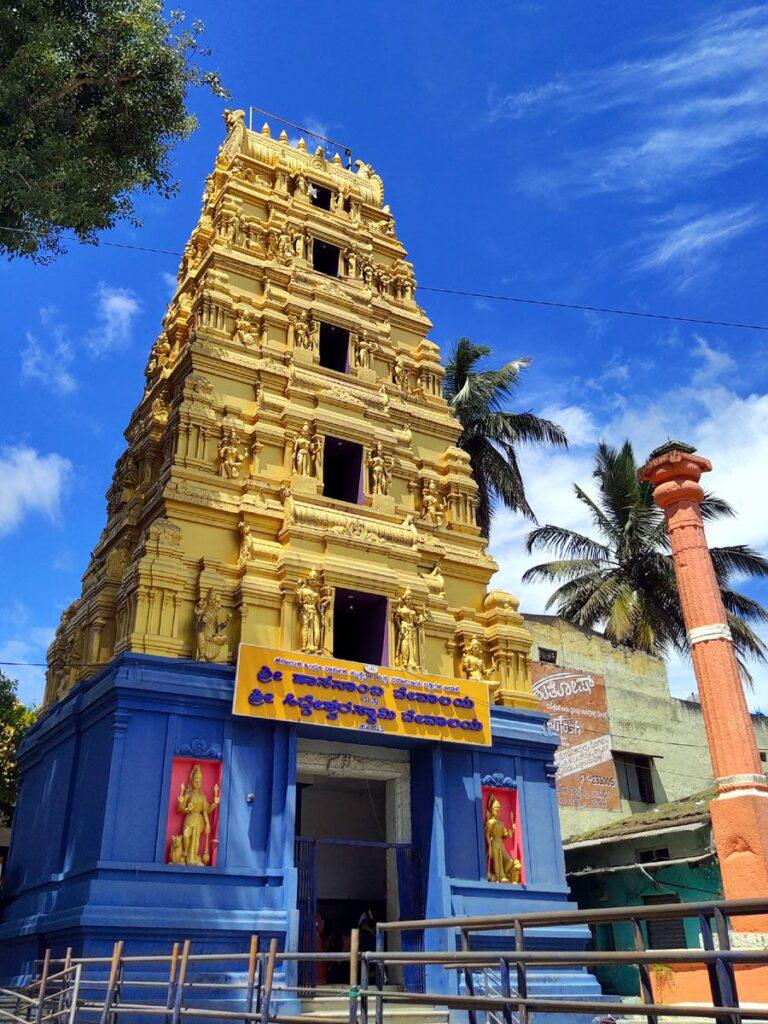
This is the Hasanamba Temple of Hassan — one of the strangest, most quietly powerful places of worship in all of India.
To understand the anthill as a throne in Hasanamba, you must first understand what an anthill means in this part of the world. Across Karnataka and the wider South Indian tradition, anthills are not mere insect architecture. They are sacred. When ants abandon a mound, cobras move in — and the cobra, in Hindu cosmology, is the companion of Shiva, the vehicle of Vishnu, the guardian of buried treasure, the keeper of the threshold between the world of the living and the underworld of Naga-loka. The anthill is that threshold made physical: a doorway pressed into the earth.
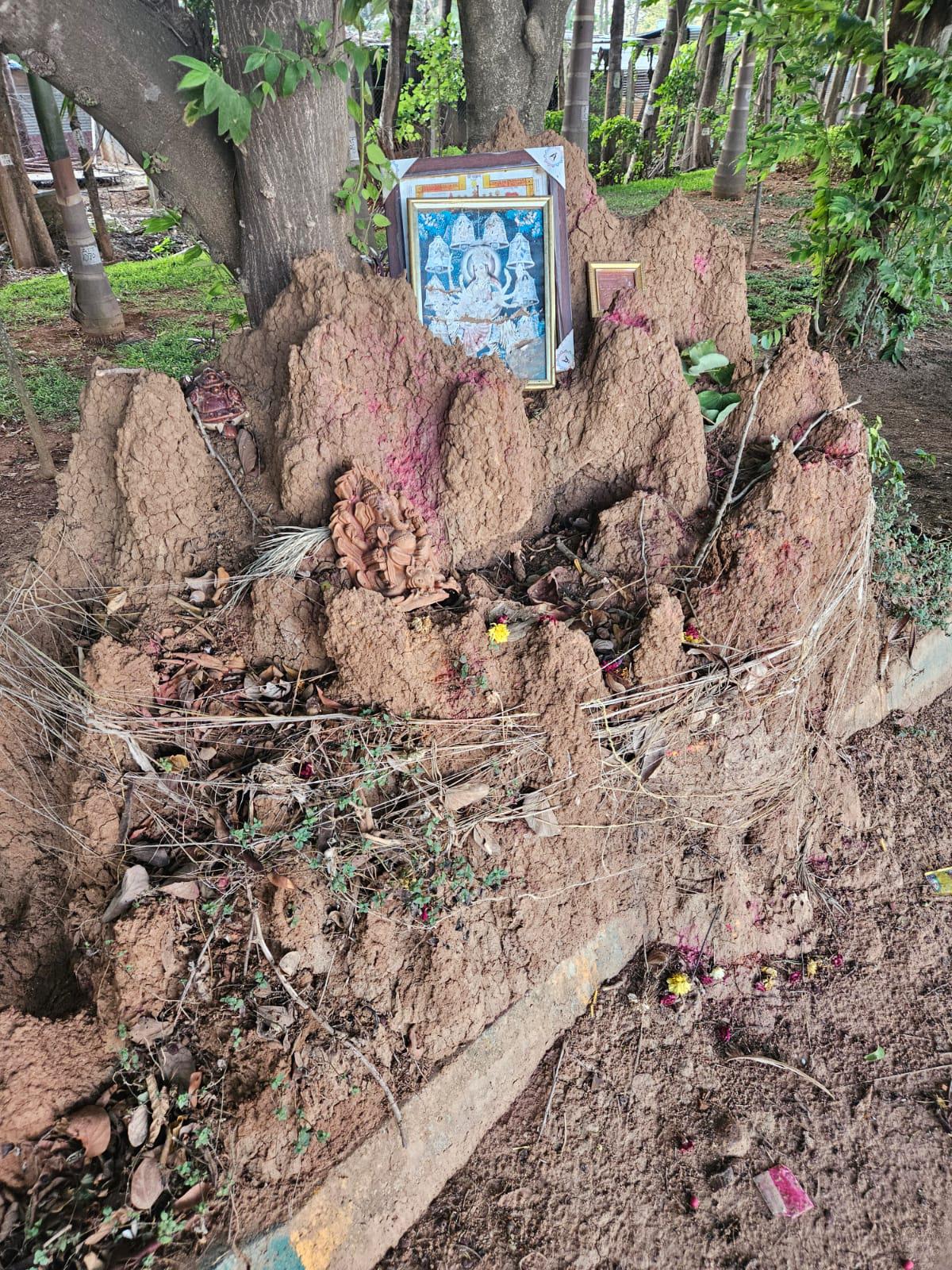
The sage Valmiki — author of the Ramayana — was swallowed by an anthill during years of meditation and emerged reborn, enlightened, transformed. His very name derives from the Sanskrit valmika, meaning anthill. The earth swallows. The earth returns. This is the oldest theology there is. It is in this tradition that Hasanamba chose her form. The idol at the centre of the temple — the object of millions of pilgrims’ devotion — is not a sculptor’s creation. It is an anthill. Three faces of the goddess are said to have formed over its surface, naturally, miraculously. The earth itself became the deity.
Seven Goddesses and One City Mythology tells of seven divine mothers — the Sapta Matrikas — who floated south from Varanasi and fell in love with the beauty of a small town in the Karnataka highlands. They chose to stay. Three of them — Maheshwari, Kaumari, and Vaishnavi — descended into anthills inside what would become the Hasanamba temple complex. Three others settled in the wells of a nearby lake, Devigere. The seventh took a hilltop to the south-west.
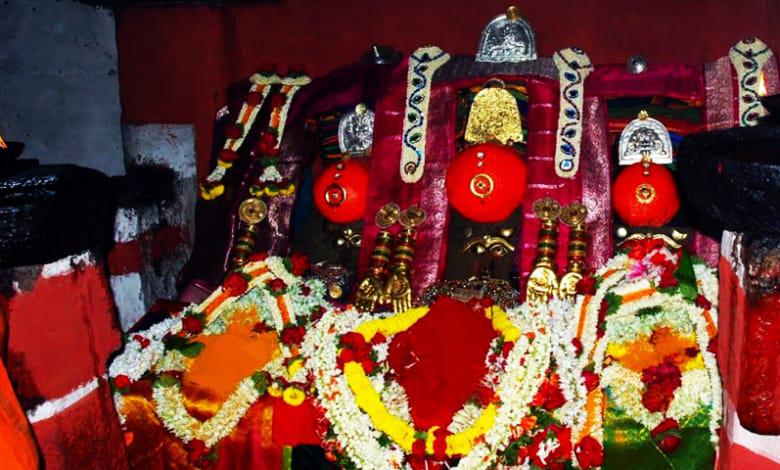
The town that grew around them took her name. Hassan — derived from Hasanamba, “the smiling mother” — is a city literally named after the smile on an anthill.The Year-Long Seal The goddess herself, legend says, ordained that the temple be opened only once a year. She wanted stillness. Privacy. The long, uninterrupted dark of closed doors. This demand has been honored for centuries.
Each year, during Deepavali — on the Thursday following the full moon of the month of Ashwayuja — the priests of Hassan break the seal. The doors, locked since the same ceremony the previous year, swing open. What they find inside has never been rationally explained: a lamp lit one year ago, still burning. Flowers placed at the goddess’s feet, still fresh. Offerings of rice, still warm.
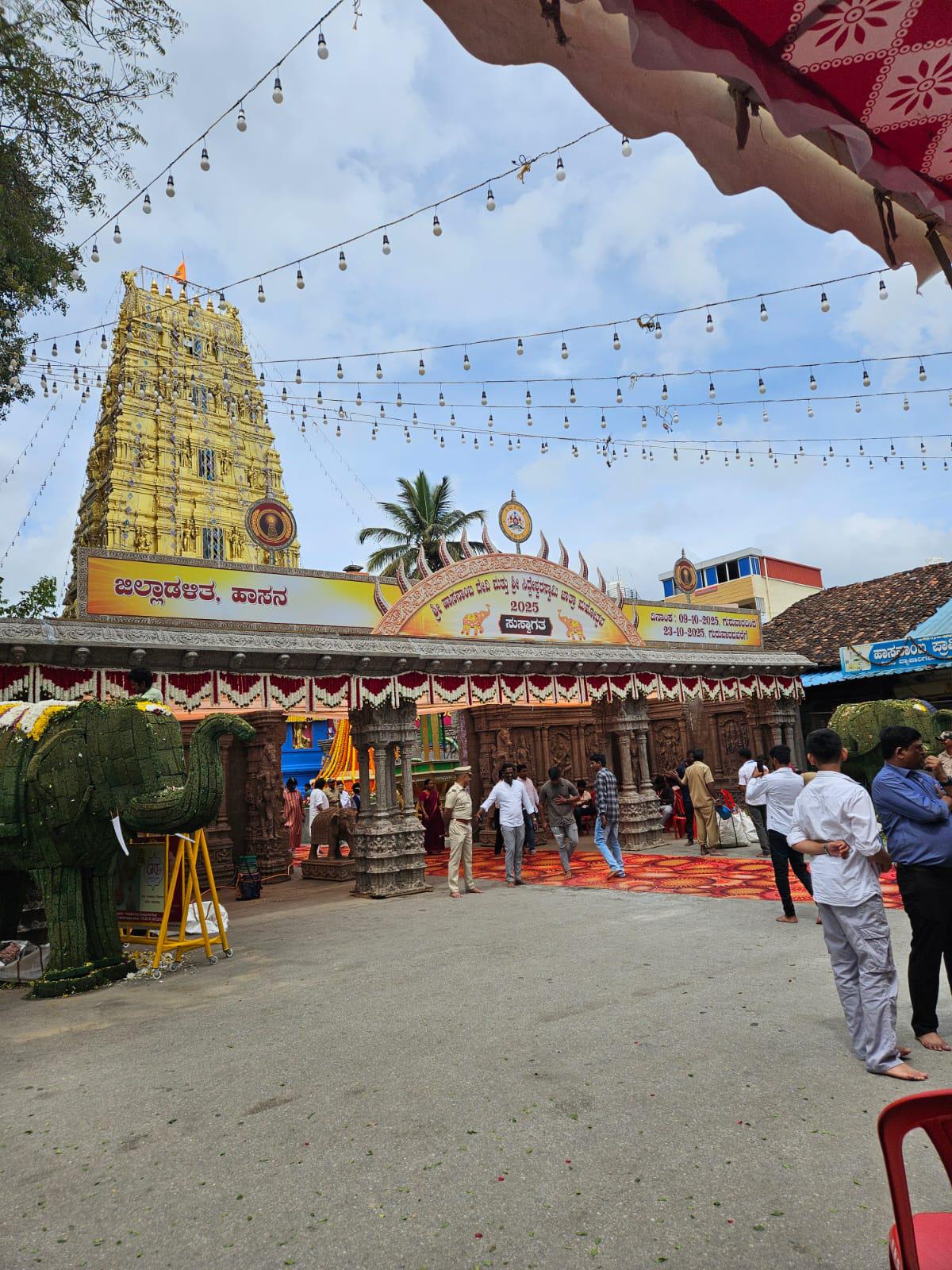
The temple remains open for approximately ten to fourteen days, depending on the lunar calendar. During this window, hundreds of thousands of pilgrims pour in from across Karnataka and beyond. Six-hour queues. Midnight crowds. The smell of incense and rain and jasmine. And then the doors close again, and the goddess retreats once more into her year-long silence.
A Living Theology of the Earth What Hasanamba represents — at its deepest root — is something far older than Hinduism as a systematized religion. It is the worship of the earth herself. The anthill is the earth’s body. The serpent in its tunnels is the earth’s lifeblood. The goddess who chose this form over any carved idol is telling her devotees something essential: the divine does not need human craftsmanship. It is already here, already present, in the red mud and the dark tunnels and the patient geometry of the insect.
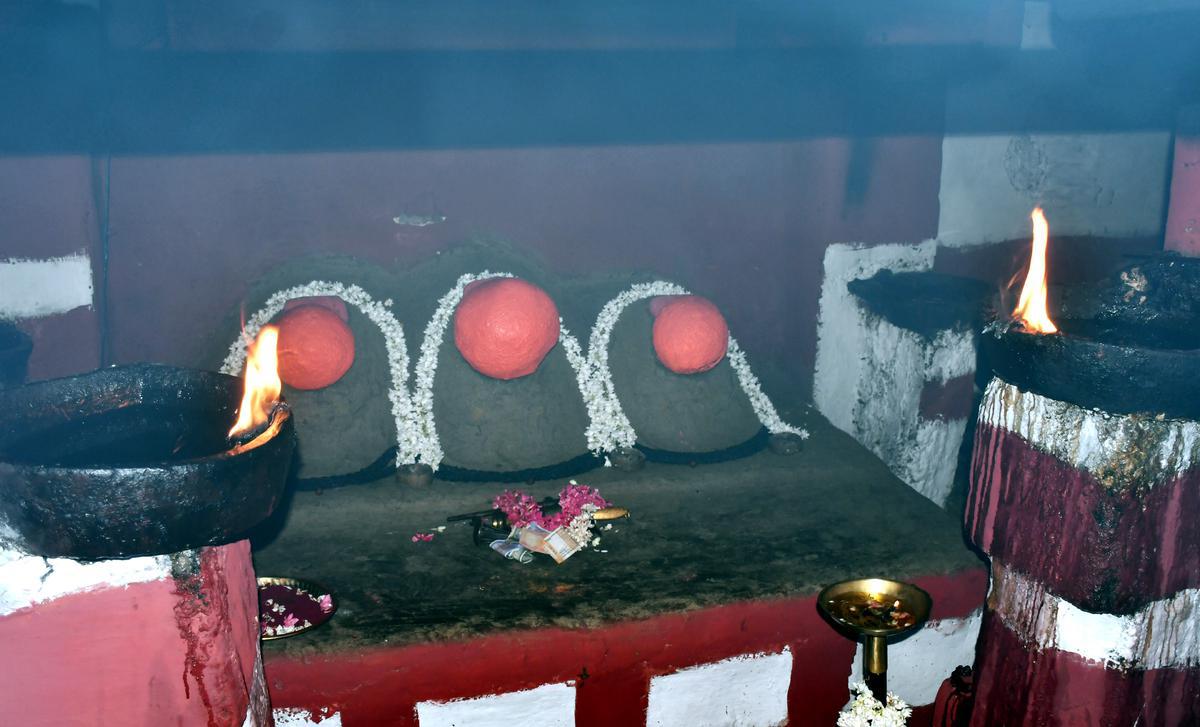
In an age when faith increasingly competes with spectacle — when temples grow taller and rituals grow louder — Hasanamba endures as a quietly radical alternative. Her power does not come from grandeur. It comes from hiddenness. From the year-long closed door. From the lamp that needs no tending.She smiles, they say, even when no one is watching.
— ☆ —
Hasanamba Temple, Hassan District, Karnataka • Built 12th century CE • Opens annually during Deepavali
Note:(pics from internet for illustration only)
Comments (4)