My Second Home!


I arrived in Cochin in 2021 carrying the wrong map. Everyone hands you the same one before you go south — backwaters, God's Own Country, a postcard with a houseboat on it — and I took it without checking the compass. I had never been to Kerala. I had only the jokes people make about Malayalis, half-affectionate and half-wary, the way you talk about a relative you've never actually met.

In these three years, I buried two of my beloved dogs in that soil. That is not a metaphor. Their bodies are in Kerala's earth, which means some part of my own compass will always point there, the way you're tethered to any ground that has taken something of yours and kept it safe.
I had come with my mojo in eclipse — my parents were gone, and grief had done what grief does, hollowed out the instrument until it couldn't hold a note. Kerala didn't console me. It re-strung me. Slowly, without asking permission, the way real healing always arrives sideways instead of head-on.
The intelligence of Malayalis undid every joke I'd been handed. It's a particular sharpness — unshowy, exacting, the kind that reads a room and a balance sheet with the same glance. My family half-joked that I must have been Malayali in a previous birth. I've stopped correcting them. Some affinities don't need a genealogy.
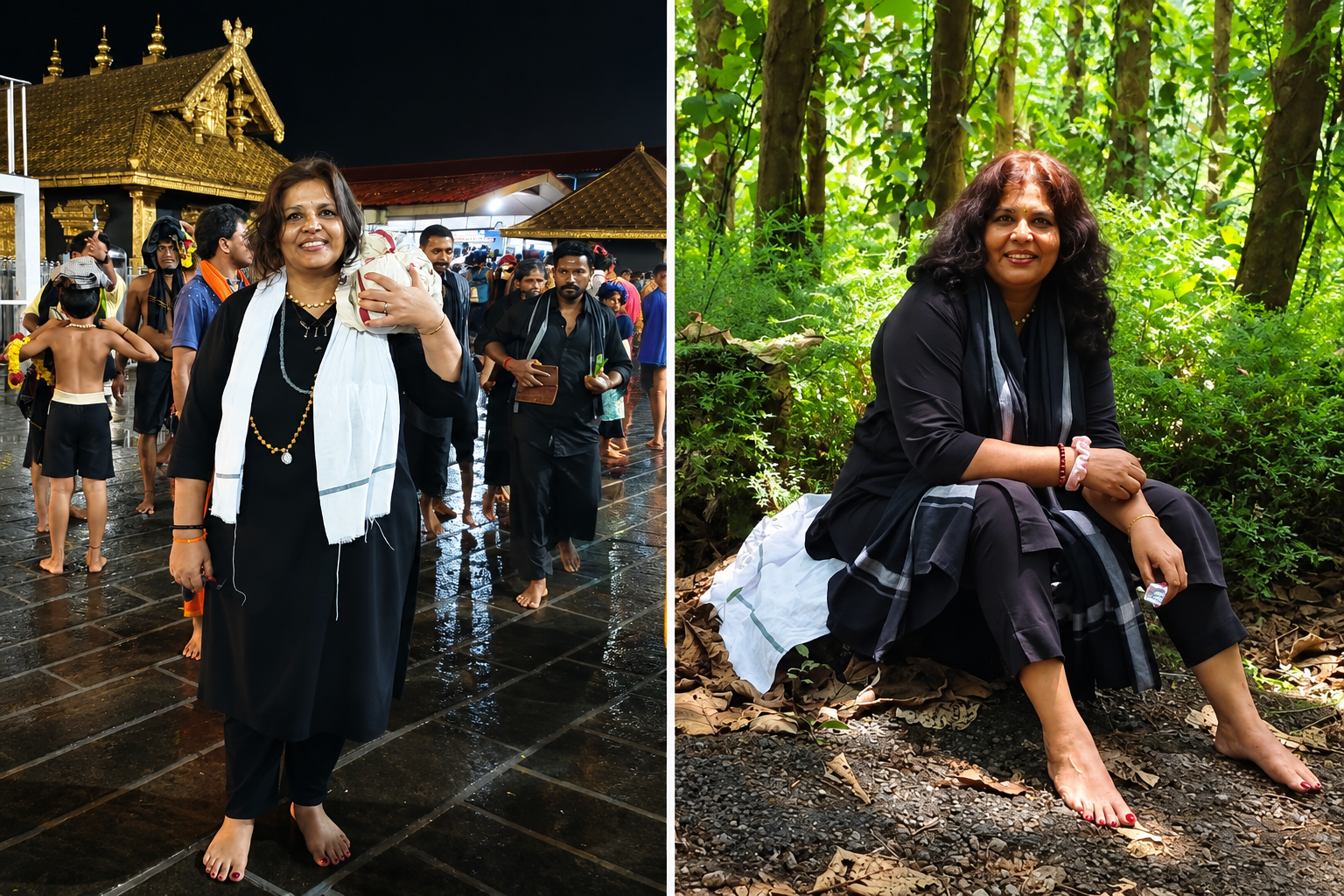
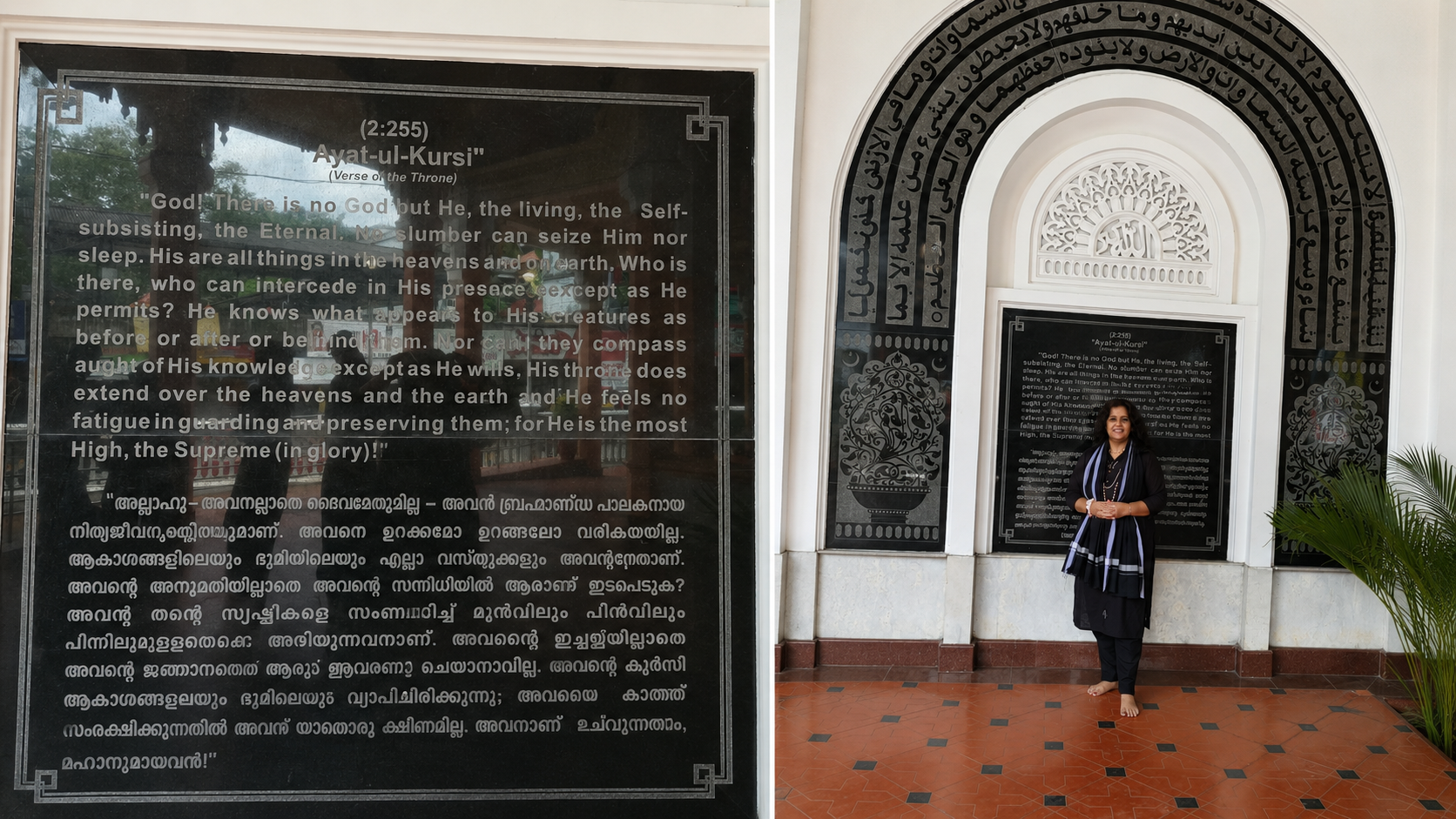
Sabarimala asked for forty-one days of restraint before it gave me anything, and by the time I climbed the eighteen sacred steps, surrender wasn't a decision anymore — it was simply the only posture left in me. On that mountain every stranger calls every other stranger Ayyappa, because divinity, up there, travels incognito inside ordinary people. And the story that undid me completely was Vavar's — the Muslim warrior who fought Ayyappan, lost, and was not conquered but adopted, given his own shrine at the summit and his own mosque at Erumeli, where Hindu pilgrims still stop to pray before the climb even begins. Tolerance, in Kerala, isn't a value people recite. It's a doorway you physically walk through on your way to God. I built Ayyappan a small temple afterward — the least a person can do for a god who asked for nothing and gave everything anyway.
Kodungallur gave me something fiercer. The Kurumba Bhagavathy temple there is older than most reasons people give for visiting it — believed to house Kannaki herself, the wronged heroine of the Chilappathikaram, later folded into Bhadrakali, the goddess who was born from Shiva's third eye to end what needed ending. I witnessed Bharani there while I was seriously unwell, unwell enough that comfort would have been the wrong medicine. Bhadrakali did not comfort me — She held me, which is a different verb entirely. Her protection has teeth in it. That is the sweetness I needed: not soft, not maternal in the diluted sense, but ferocious in a way that made healing feel earned rather than given.
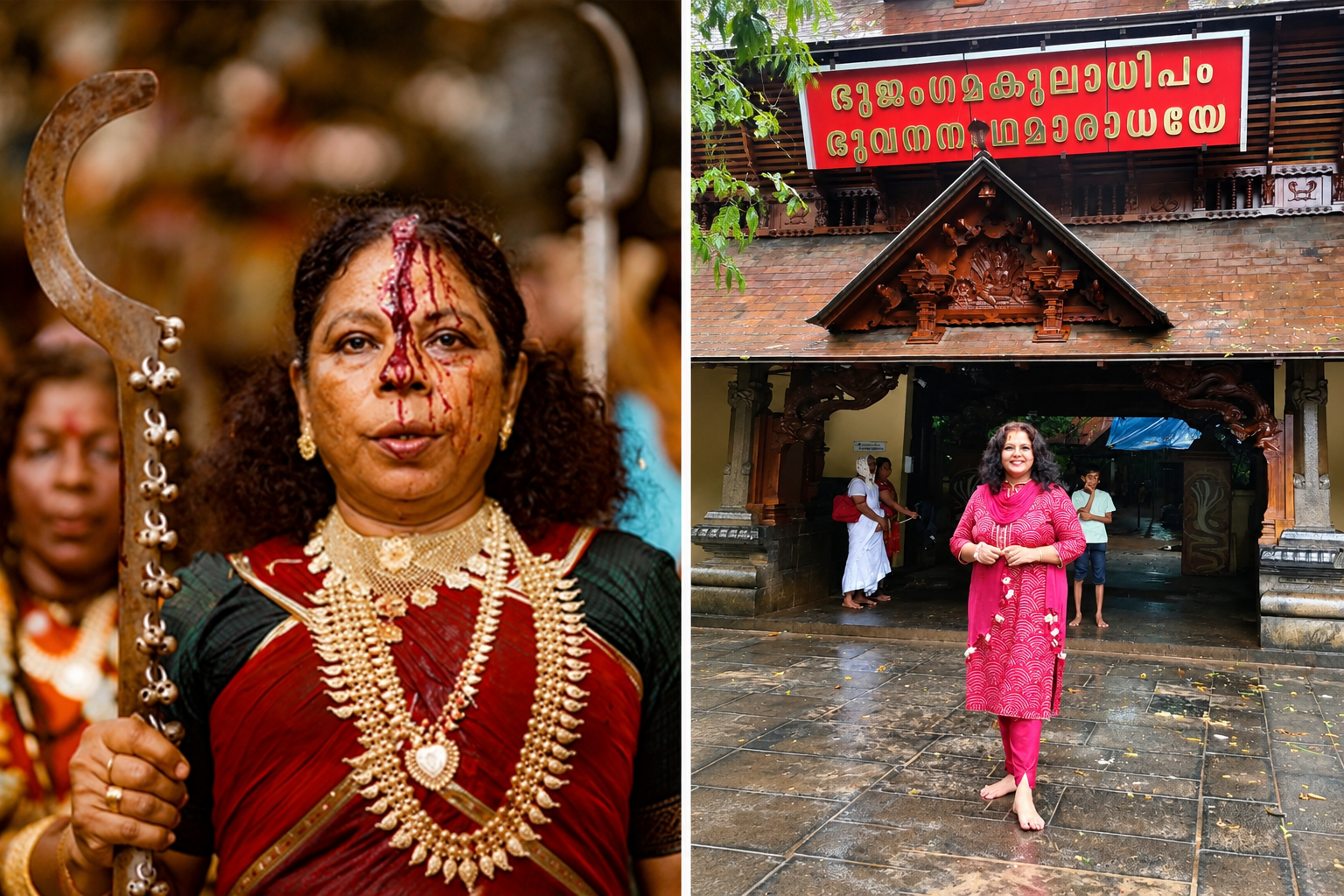
Kerala kept handing me devotion in unfamiliar shapes. At Chamayavilakku, men become women for a night to carry lamps to the Goddess — no irony in it, no performance, just centuries of men deciding the most sincere thing they could offer Her was to become, for a few hours, what she is.
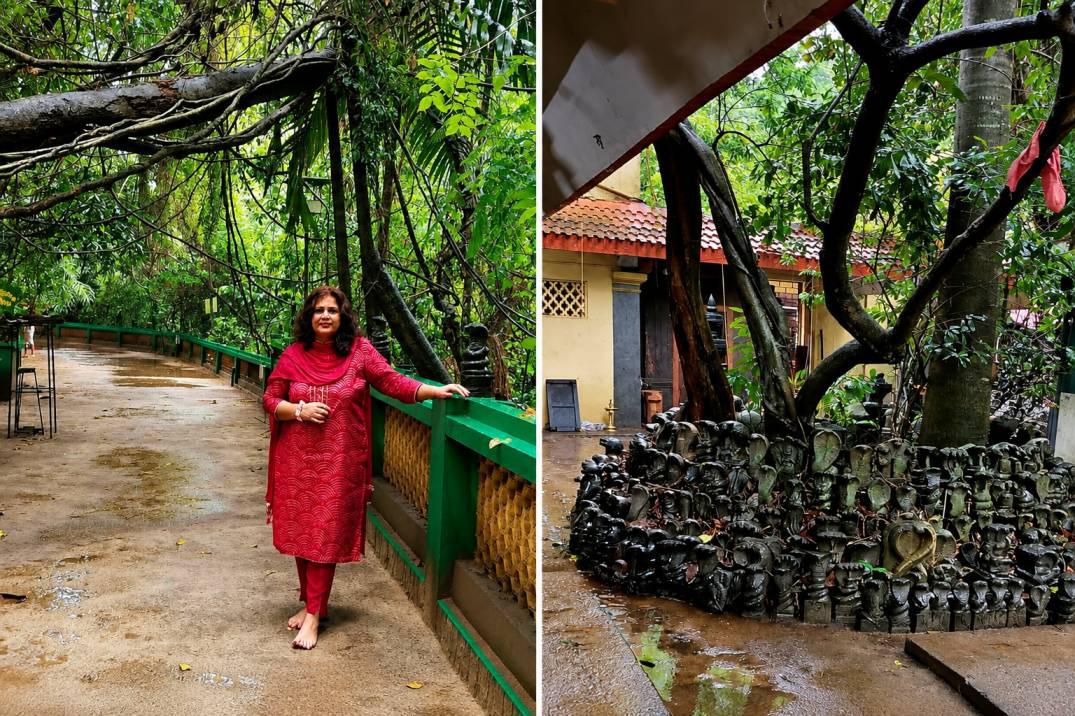
Snake worship reached me somewhere older than belief. Every old Kerala household once kept a sarpa kavu — a small wild grove left deliberately untamed at the edge of the compound, home to the Naga deities, entered only for ritual and otherwise left to overgrow. Legend has it that Parasurama, finding the land infested with serpents, struck a truce on Kerala's behalf: the snakes could keep their groves undisturbed, in exchange for peace with the humans who'd arrived. Mannarasala, the great serpent shrine near Haripad, still keeps that truce alive — a temple run for centuries not by a priest but by a priestess, the Valiya Amma, its groves so thick with real snakes that no one has ever counted the stone ones hidden among them. Temples still hold a special Ayilyam pooja on the day of the Ashlesha star, my star — the one classical astrology hands to the serpent, coiled and watchful. Standing before a kavu thick with turmeric and stone nagas half-swallowed by roots, I didn't feel like a visitor being shown something. I felt like something being recognised.
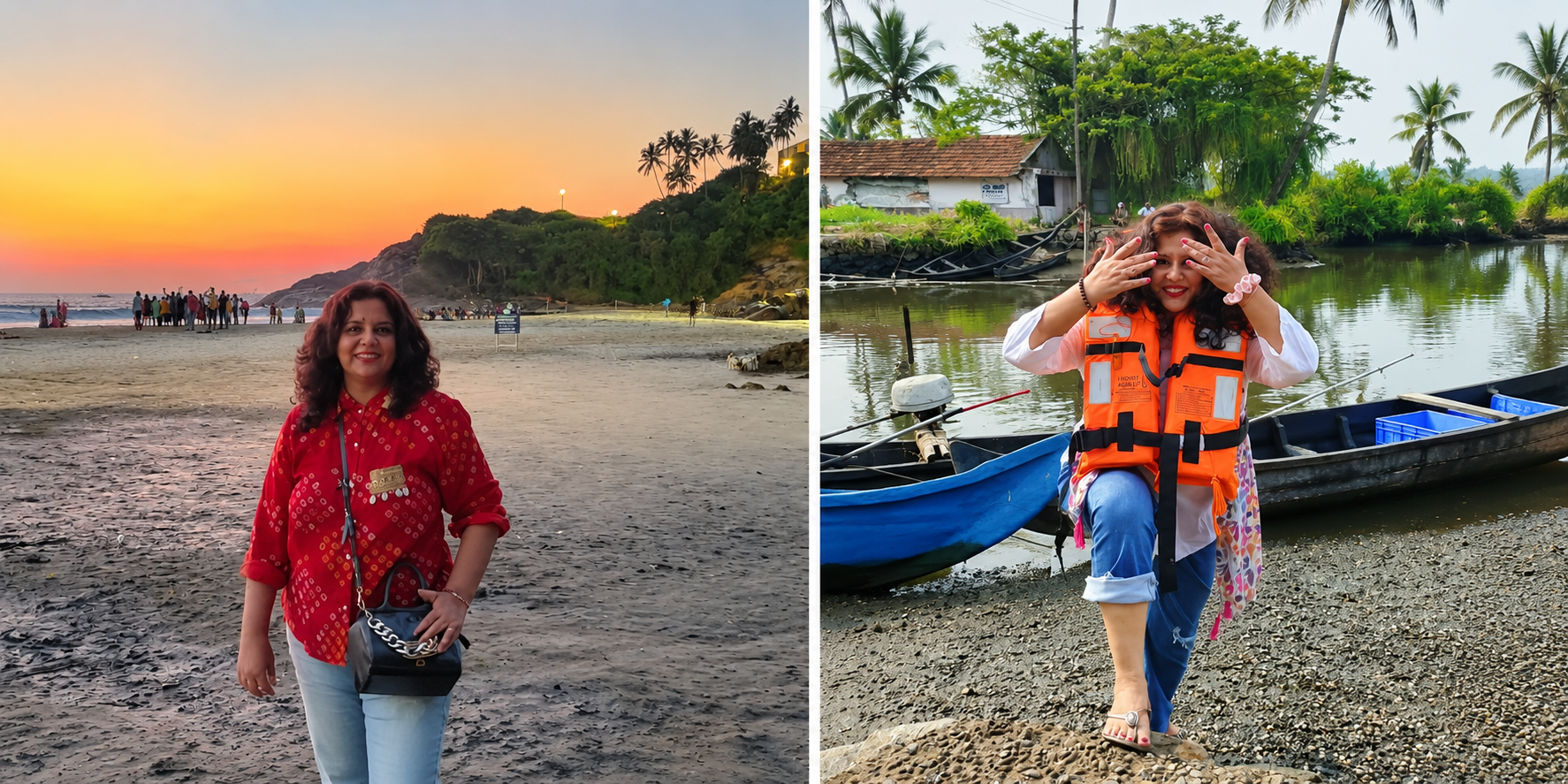
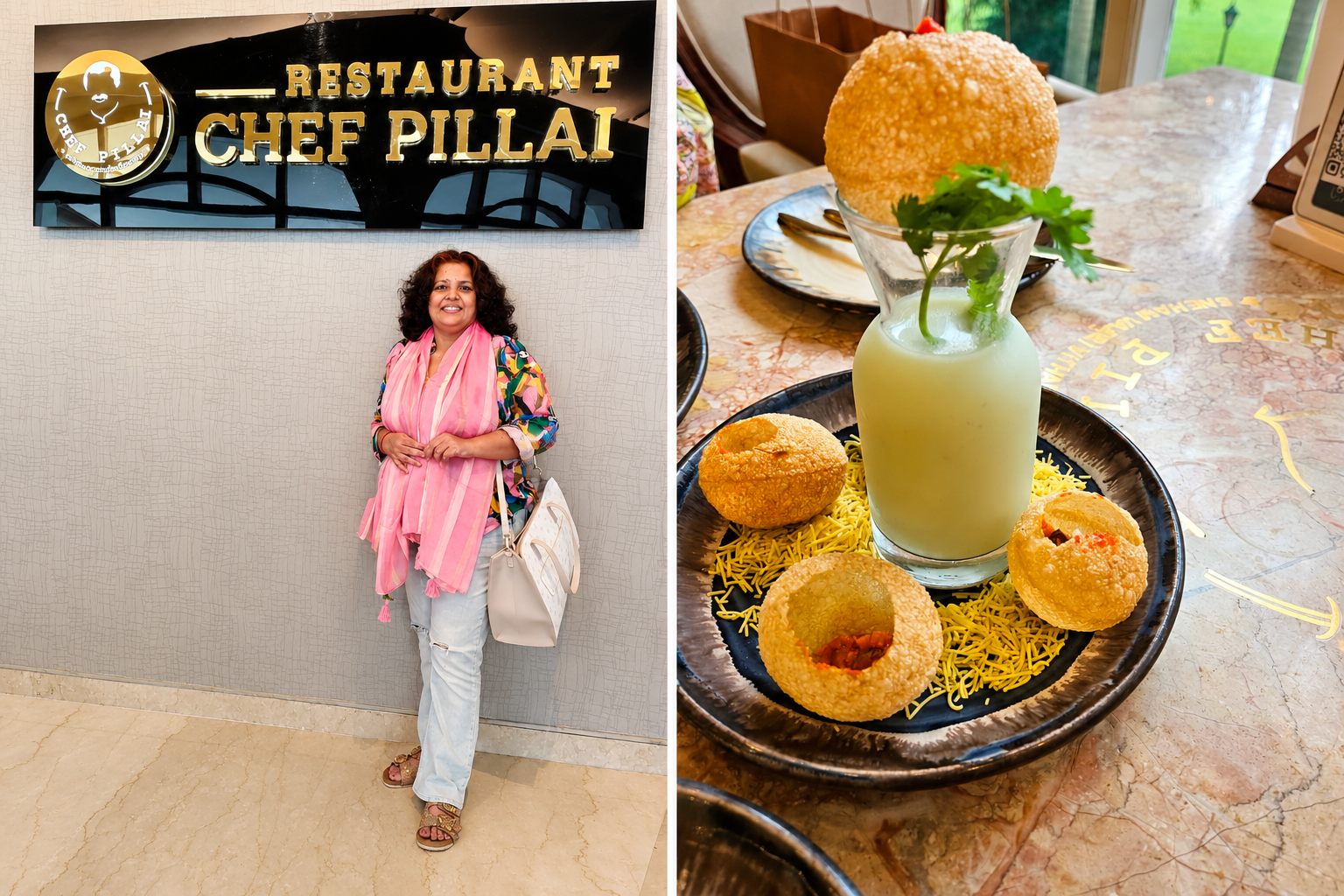
And then the ordinary miracles, because Kerala never separates the mystical from the domestic — appam soaked through with toddy, stew that tastes like something someone's grandmother refuses to write down, puttu steaming its way into a Sunday morning. Chef Pillai taught me what real devotion to a fish looks like — his Fish Nirvana is less a dish than an argument for staying in Kerala forever, and I have never once won the argument against it. Malabar biryani made its own case too, and Paragon's version settled that one for good. Fort Kochi gave me its evenings — that particular hour when the light goes copper over the water and centuries of trade, of Portuguese and Dutch and Jewish and Arab hands, seem to still be negotiating quietly with each other in the walls.
Onam, and the ritual of dressing for it, taught me that ceremony isn't costume — it's how a culture keeps its own shape. I stood at the edge of a river during the vallam kali, watching a hundred oarsmen move one boat like a single held breath, and understood something about collective devotion that no temple had managed to teach me. And somewhere in the middle of it all, I found myself talking to Mavali — or rather, to what he represents: a king so beloved that his people negotiated an annual visit from the netherworld just to keep faith with him. I have never met a festival more honest about what it's actually mourning and celebrating at once.
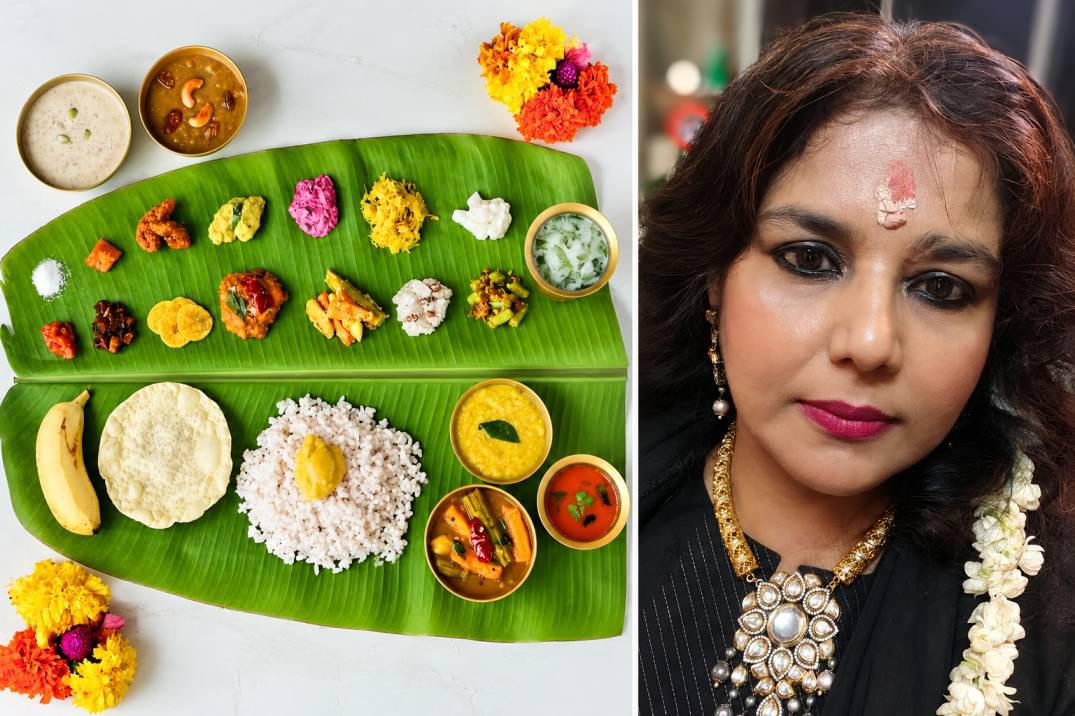
The jewellery undid me slowly, the way inheritance does. A kasumala is a necklace of tiny gold coins, each stamped with the goddess, worn like wealth that never forgets who it belongs to. A nagapadam takes its shape from a serpent's hood — the same serpent watching over the groves — cast in gold and set with stones, meant to be worn against the throat like a small, deliberate courage. Temples in Kerala have kept their own jewellers for centuries, families whose entire inheritance was the memory of a single clasp or setting, and some of those gold hoards, tucked into vaults beneath places like Thiruvananthapuram's Padmanabhaswamy temple, are old enough that no one alive remembers everything they contain. I understood, buying my own first pieces there, why Malayalis don't call it jewellery. They call it what's been kept.
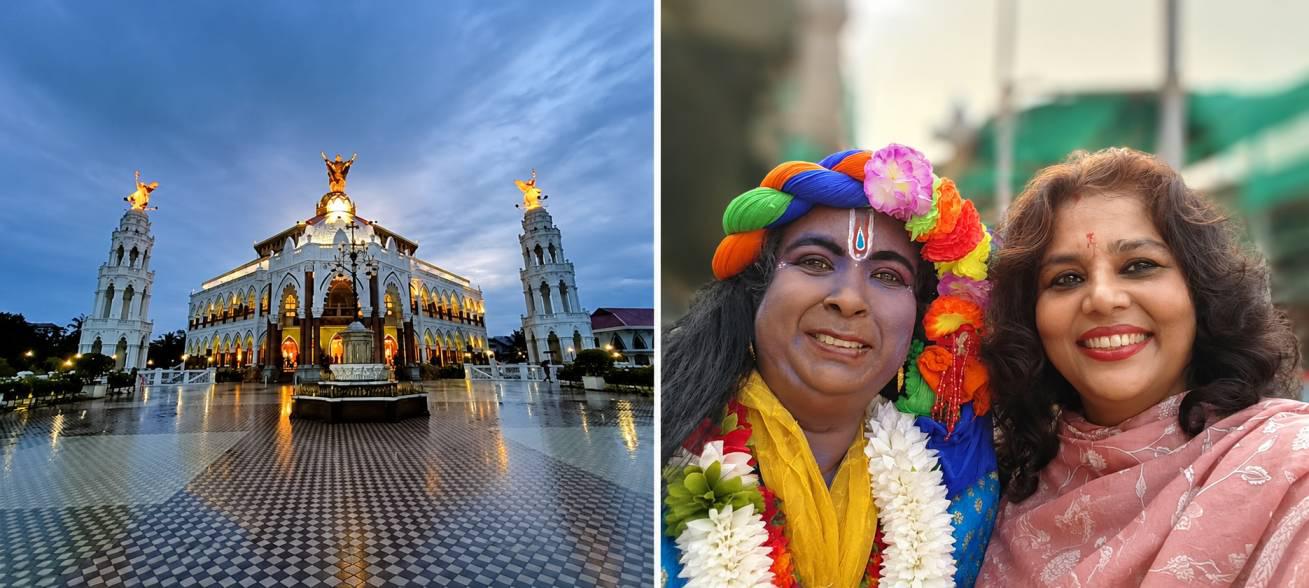
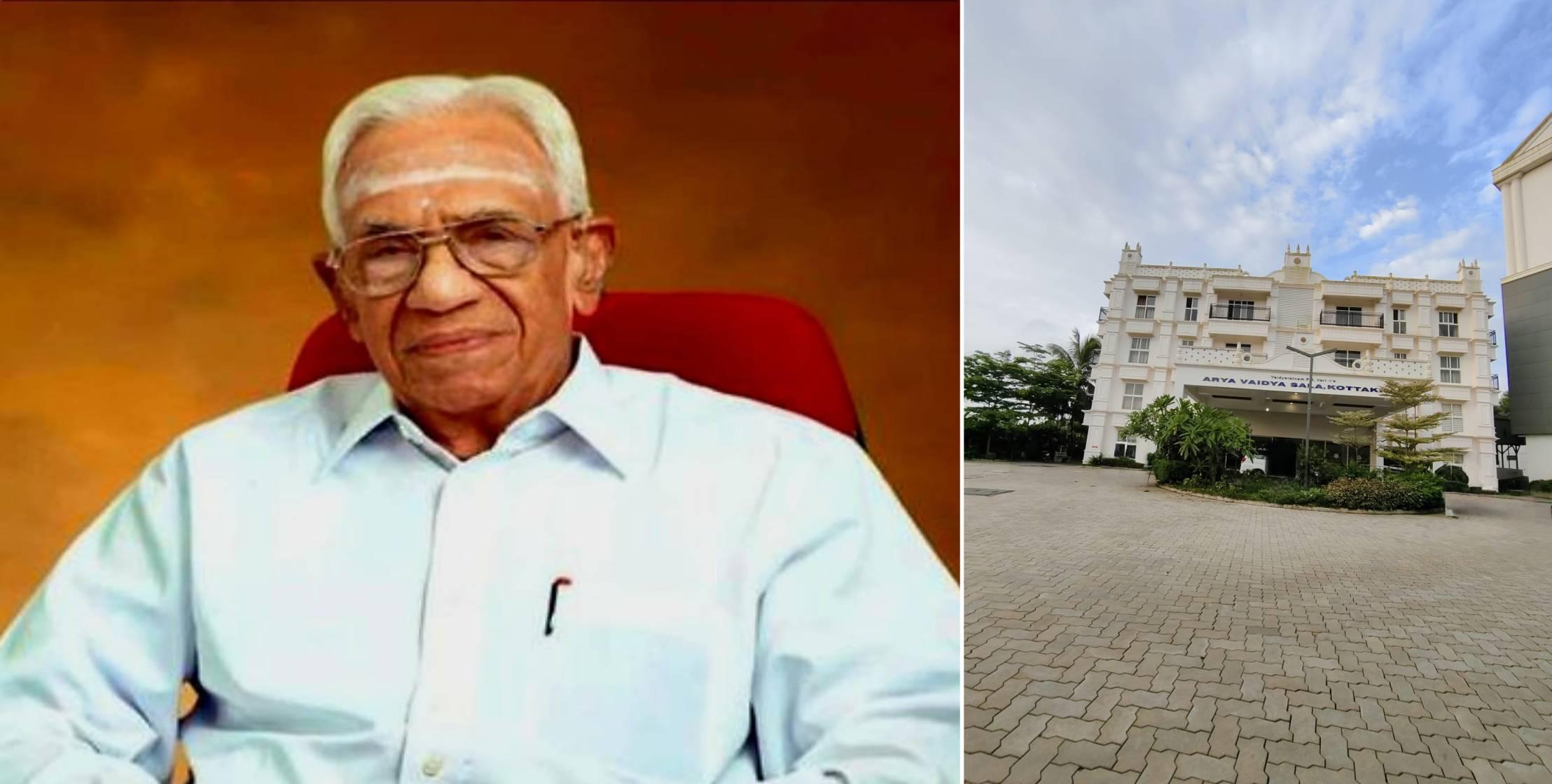
And Ayurveda, which treats the body as a text worth reading slowly instead of skimming for symptoms. Kerala never let the science lapse the way the rest of India sometimes did — families of hereditary physicians, the ashtavaidyas, kept the texts and the touch alive across generations inside their own households, long before anyone called it wellness. It took a village clinic in Kottakkal in 1902, and a physician named P.S. Varier who'd trained under one of those very families, to formalise what had survived as guarded, private knowledge into something the rest of the world could walk into. I went in for treatment and came out with a philosophy: that the body, like anything worth understanding, doesn't yield to force. Only to attention, paid consistently, over time.
And Lulu Mall — unglamorous, air-conditioned, entirely unmystical — which I now look for in every metro city I visit, the way you look for a friend's handwriting in someone else's letter.
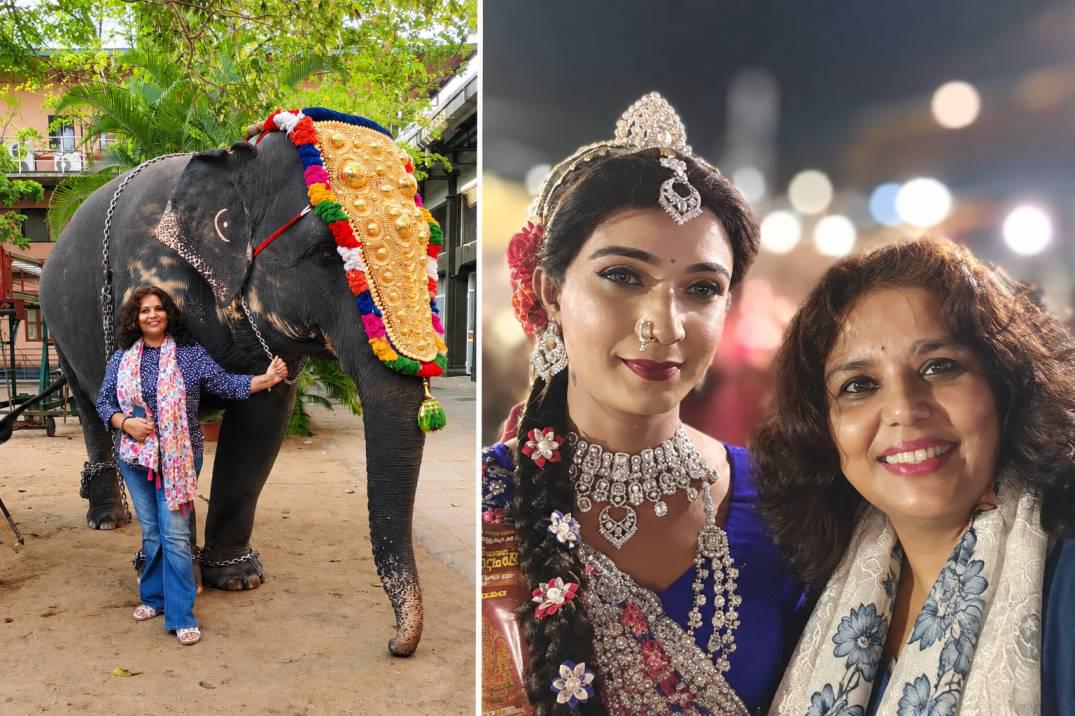
None of this would have mattered without the people who let me in. Kerala's famous wariness of outsiders never once reached me — instead I found doors held open, tables set for one more, a hospitality that asked nothing in return except that I stay long enough to be known. Some of those people I no longer think of as friends. I think of them as family — the kind you didn't inherit but chose, and who chose you back, which somehow counts for more.
I went to Kerala with a tourist's outlook and left with a second home. Not every place that heals you asks to be loved back. Kerala did neither — it simply kept working on me until I noticed I'd stopped being the person who arrived.
Note:(pics from internet for illustration only)
-SunheriSufi
Comments (38)